

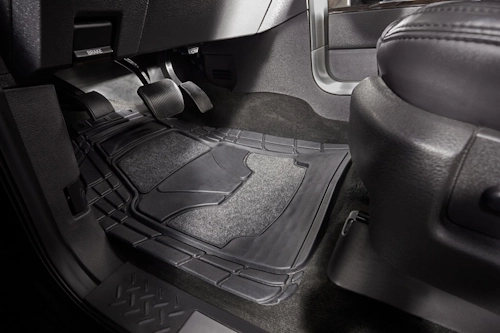
Why Floor Mats Matter More Than You Think
Your vehicle's floor mats serve as the primary defense against the elements you track in daily - dirt, salt, pollen, snow, mud, and moisture. Beyond keeping your interior looking fresh, quality mats prevent these contaminants from damaging your vehicle's carpet fibers and underlying flooring. The safety implications are equally critical: properly secured mats prevent dangerous pedal interference, while textured surfaces reduce foot slippage during driving. Additionally, maintaining pristine interior flooring through quality mat protection significantly enhances your vehicle's resale value by preserving factory-condition carpets underneath.
Selecting the Perfect Floor Mats
Fitment Types: Finding Your Match
Not all floor mats are created equal when it comes to vehicle compatibility. Understanding the three primary fitment categories ensures optimal protection:
| Type | Benefits | Limitations |
|---|---|---|
| Universal Fit | Budget-friendly, widely available, simple installation | Imperfect coverage, potential sliding issues, no factory hook compatibility |
| Trim-to-Fit | Customizable coverage, better protection than universal options | Requires careful trimming, higher price point, irreversible modifications |
| Custom Fit | Perfect contour matching, maximum coverage, integrates with factory retention systems | Premium pricing, vehicle-specific availability, longer ordering process |
Material Showdown: Pros and Cons
Your climate, lifestyle, and aesthetic preferences should guide your material selection
| Material | Best For | Maintenance Level |
|---|---|---|
| Rubber/Vinyl | All-weather protection, snowy/sandy climates, work vehicles | Easy cleaning (hose-down), excellent liquid resistance |
| Carpet | Urban driving, luxury aesthetics, OEM appearance | Moderate (regular vacuuming, spot cleaning) |
| Hybrid Designs | Balance of comfort and protection, carpeted look with rubber borders | Moderate (combination cleaning methods) |
Pro Tip: Look for mats featuring specialized heel pads beneath the driver's accelerator foot. This reinforced area withstands concentrated wear from repeated foot positioning, significantly extending mat lifespan.
Installation Mastery: Doing It Right
Proper installation isn't just about placement - it's a critical safety procedure that prevents dangerous mat interference with pedal operation:
Preparation Steps
- Remove existing mats completely - Never layer new mats over old ones, which creates unstable stacking and pedal obstruction risks
- Thoroughly vacuum and clean the underlying carpet - Eliminate debris that could cause uneven mat placement or create odors over time
- Verify compatibility with your retention system - Identify factory hooks, posts, or Velcro-style anchors before installation
Installation Procedure
- Position mat with anti-slip surface downward, aligning with the vehicle's floor contours
- Secure retention clips/hooks through designated mat openings
- Conduct critical safety checks:
- Ensure minimum 2-inch clearance between mat edges and all pedals
- Test full pedal travel range (accelerator and brake)
- Verify mat doesn't contact base of seat tracks
- Check driver mat doesn't fold upward when entering/exiting
Safety Alert: The National Highway Traffic Safety Administration (NHTSA) attributes thousands of accidents annually to improperly installed floor mats. Always perform pedal operation tests after installation and periodically thereafter.
Comprehensive Cleaning Techniques
Carpet Mat Restoration
Fabric mats require specialized care to maintain appearance and prevent premature wear:
- Pre-treatment: Remove mats and beat them firmly to dislodge dry debris. Follow with thorough vacuuming using a stiff-bristle brush attachment to lift embedded particles
- Stain Treatment: Apply carpet-safe cleaner (diluted 10:1) or foam upholstery cleaner. For stubborn stains, use Folex or Tuff Stuff cleaners without oversaturating
- Deep Cleaning: Scrub with circular motions using a soft-bristle brush. For heavily soiled mats, use a pressure washer (12"+ distance) or washing machine (gentle cycle, air dry)
- Drying: Hang vertically or place on edge in shaded, well-ventilated area. Ensure complete dryness before reinstallation to prevent mildew
Rubber/Vinyl Mat Revitalization
All-weather mats withstand more aggressive cleaning but require protection against UV damage:
- Initial Rinse: Remove loose debris with garden hose sprayer or pressure washer (40° nozzle recommended)
- Degreasing: Apply diluted all-purpose cleaner (4:1) or dish soap solution. For heavy grime, use dedicated rubber mat cleaner
- Detail Scrubbing: Use stiff-bristle brush for textured surfaces, paying special attention to grooves and heel pad areas
- Final Rinse: Remove all soap residue thoroughly to prevent slippery surfaces
- Protection: Apply UV protectant (non-silicone based) to prevent rubber drying and cracking, especially in hot climates
Detailing Pro Technique: For heavily soiled mats, implement the "double clean method" - after initial wash and rinse, reapply cleaner and agitate with a drill brush attachment before final rinse. This ensures deep cleaning of textured surfaces.
Maintenance Schedule
| Frequency | Maintenance Task |
|---|---|
| Weekly | Remove and shake out mats; vacuum underlying carpet |
| Monthly | Deep clean appropriate to material type |
| Seasonally | Inspect for wear, damage, and secure fitment |
| After exposure | Immediate cleaning after salt/mud/sand contact |
Professional Insights: Avoiding Common Mistakes
Selection Errors
- Prioritizing price over protection: Universal mats may save initially but often require earlier replacement than custom solutions
- Ignoring climate considerations: Carpet mats in rainy/snowy regions lead to moisture retention and carpet damage underneath
- Overlooking retention systems: Mats without proper anchoring become safety hazards regardless of material quality
Installation Dangers
- Stacking mats: Creates unstable surfaces and pedal obstruction risks
- Ignoring factory hooks: Increases mat movement during acceleration/braking
- Inadequate pedal clearance: Mats can creep upward and interfere with pedal operation over time
Cleaning Missteps
- Using silicone-based products: Creates slippery surfaces on rubber mats
- Oversaturating carpet mats: Leads to mold growth and prolonged drying times
- Installing damp mats: Traps moisture against vehicle carpeting, causing odor and corrosion issues
Maximizing Value Through Proper Mat Maintenance
Beyond immediate protection, quality mats preserve your vehicle's long-term value. When removing mats for trade-ins or private sales, pristine factory carpets significantly enhance buyer perception and offer price justification. Well-maintained custom mats themselves can become selling points, demonstrating conscientious ownership throughout the vehicle's life. Industry valuation experts consistently note that vehicles with protected, stain-free interiors command premium pricing compared to those showing carpet wear or damage.
By implementing the selection criteria, installation protocols, and maintenance routines outlined in this guide, you transform simple floor mats from disposable accessories into valuable investments in your vehicle's longevity, safety, and resale potential. Your vehicle deserves protection from the ground up - quality mats deliver precisely that.