

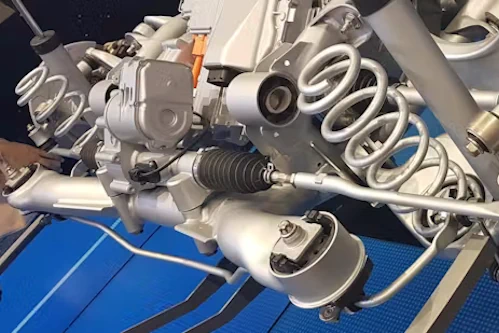
How Electric Power Steering Works
Electric Power Steering (EPS) replaces traditional hydraulic systems with intelligent electromechanical components. Unlike hydraulic pumps that drain engine power, EPS uses a 12V or 48V electric motor to provide precise, on-demand assistance. Sensors and control modules work in harmony to interpret driver input and road conditions, delivering optimized steering feel across speeds.
Core Components of EPS
- Torque Sensor: Measures steering wheel input force via a torsion bar (0.25–4.75V analog signals).
- Steering Angle Sensor: Tracks wheel position using Hall-effect/GMR technology.
- ECU: Analyzes data from 10+ inputs (speed, yaw, motor temp) to calculate assist levels.
- Brushless DC Motor: Delivers 9–42V assistance through worm gears or belt drives.
4 Types of EPS Configurations
1. Column-Assist EPS (C-EPS)
Motor integrated into steering column. Ideal for compact cars like Honda Fit.
2. Pinion-Assist EPS (P-EPS)
Motor attached to pinion shaft. Used in mid-size SUVs like Ford Escape.
3. Rack-Assist EPS (R-EPS)
Direct rack-mounted motor for heavy vehicles. Common in trucks like GMC Sierra.
4. Dual-Pinion EPS
Separate input/output pinions. Enables autonomous features in cars like Tesla Model 3.
Why Automakers Are Switching to EPS
| Benefit | Impact | Source |
|---|---|---|
| 3–5% Fuel Savings | Eliminates parasitic hydraulic pump drag | |
| Lane-Keep Assist | Integrates with ADAS via CAN bus | |
| Custom Driving Modes | Software-tuned steering feel (Sport/Comfort) |
Maintenance Insights
- Sensor Calibration: Required after alignments or battery changes
- Overheat Protection Motor current limits at 150°C to prevent damage
- Diagnostic Codes: Use OBD-II scanners to read C0475/U2105 errors
Future Trends
Next-gen EPS enables SAE Level 4 autonomy through:
- Steer-by-wire systems (Infiniti Q50)
- 4-wheel steering (GMC Hummer EV CrabWalk)
- AI-powered road feedback
Practical section
Can EPS work without battery power?
Yes, but requires 3–5× more steering effort. Always check 60A EPS fuse first.
Why does my steering feel jerky?
Common causes: Faulty torque sensor (replace $250–$400) or worn reduction gears.