

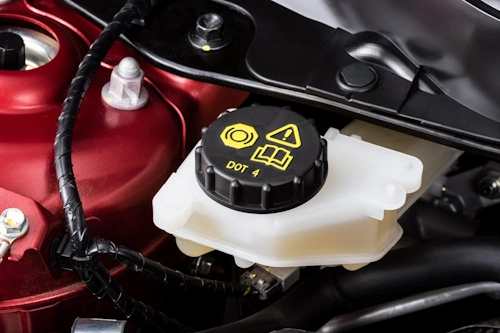
Brake fluid is one of the most overlooked maintenance items in a car, yet it plays a critical role in ensuring safe and reliable braking. Unlike engine oil, which has a visible dipstick and often shows signs of wear through sound or performance, brake fluid silently degrades inside a sealed system. Knowing when to change it, how to choose the right type, and how to replace it without unnecessary issues is essential for every car owner, mechanic, or auto enthusiast.
Why Brake Fluid Matters
The braking system of a car works on hydraulic pressure. When you press the brake pedal, fluid transfers force to the brake calipers, squeezing the pads onto the discs. If the brake fluid is old, contaminated, or overheated, this hydraulic pressure weakens, leading to a spongy pedal or, in the worst case, complete brake failure.
When to Change Brake Fluid
Most manufacturers recommend replacing brake fluid every 2 years or around 40,000 km (25,000 miles). However, this interval can vary depending on the driving environment:
- Urban driving: frequent stop-and-go increases heat, accelerating fluid wear.
- Mountain driving: heavy braking on descents leads to higher fluid temperatures.
- Cold climates: condensation increases moisture absorption, lowering boiling point.
Brake fluid is hygroscopic, meaning it absorbs moisture over time. Even in a sealed system, tiny amounts of water vapor enter, which lowers the boiling point. Once enough moisture is present, hard braking can cause vapor bubbles, reducing braking efficiency dramatically.
Brake Fluid Classification (DOT Standards)
Brake fluids are classified under the DOT (Department of Transportation) standard, which defines their boiling points and chemical composition.
| Type | Base | Dry Boiling Point | Wet Boiling Point | Notes |
|---|---|---|---|---|
| DOT 3 | Glycol-based | 205°C | 140°C | Common in older vehicles, budget-friendly. |
| DOT 4 | Glycol-based | 230°C | 155°C | Standard for most modern cars. |
| DOT 5 | Silicone-based | 260°C | 180°C | Does not absorb water, but incompatible with ABS and glycol-based systems. |
| DOT 5.1 | Glycol-based | 260°C | 180°C | High performance, compatible with DOT 3/4, often used in racing. |
How to Choose the Right Brake Fluid
When choosing brake fluid, always check the manufacturer’s specifications in the service manual or on the brake reservoir cap. General rules include:
- DOT 3: Suitable for older vehicles with less demanding braking systems.
- DOT 4: The most common choice for modern passenger cars.
- DOT 5.1: Best for high-performance vehicles or heavy-duty applications.
- DOT 5: Rarely recommended, suitable mainly for vintage or military vehicles without ABS.
Avoid mixing different types unless absolutely necessary. Although DOT 3, 4, and 5.1 are chemically compatible, mixing lowers the performance to the weakest type.
How to Replace Brake Fluid Without Problems
Replacing brake fluid is not difficult, but it requires attention to cleanliness and safety. Follow this simplified process:
- Prepare materials: correct DOT fluid, wrench, clear tubing, catch bottle, and gloves.
- Clean the reservoir cap: to prevent dirt from entering the system.
- Drain old fluid: by opening bleed valves at each wheel, starting from the farthest from the master cylinder.
- Add new fluid: slowly fill the reservoir, ensuring it never runs dry.
- Bleed the system: pump until clean, bubble-free fluid emerges.
- Test drive: ensure the brake pedal feels firm before normal use.
Common Mistakes to Avoid
- Using the wrong DOT fluid – always double-check specifications.
- Letting the reservoir run empty during replacement, which introduces air into the system.
- Spilling brake fluid on paint – it is highly corrosive.
- Mixing silicone-based DOT 5 with glycol-based fluids.
Conclusion
Brake fluid may not be as visible as oil or tires, but it is no less important. Regularly replacing it according to the manufacturer’s schedule, choosing the correct DOT classification, and avoiding common mistakes ensures safe braking and extends the lifespan of your braking system. Think of it as cheap insurance for your car — and for your life.