

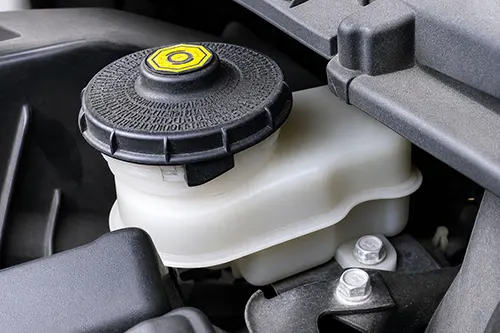
You check your brake fluid reservoir one morning and notice the level has dropped a few millimeters below the "MAX" line. No big deal, you think—probably just pad wear. But then you pull a front wheel and see the brake pads still have plenty of meat left. Now it gets puzzling. Is this normal? Could there be a tiny, invisible leak? Or is your brake fluid level sensor just messing with you?
As someone who has spent decades under hoods and behind wheels, I’ve seen this scenario hundreds of times. A slowly dropping brake fluid level, with no obvious external drips, sends a lot of drivers straight into panic mode. The truth is often less dramatic than that. Still, ignoring even a small drop can lead to brake failure or expensive component damage. So let’s cut through the guesswork and lay out a mechanic’s roadmap for finding the real cause.
First, Understand How Brake Fluid Level Normally Changes
Brake fluid does not get “used up” like fuel or oil. The system is sealed, except for a small vent in the reservoir cap. So where does the fluid go? There are two main natural processes that lower the level over time:
- Brake pad wear – As pads thin, caliper pistons extend further out of their bores. That extra piston volume fills with fluid, pulling it from the reservoir. This is the most common reason for a slow drop. Typically, when pads go from new to 10-20% remaining, the reservoir level can fall from MAX to MIN.
- Fluid hygroscopy – Brake fluid absorbs moisture from the air over months. Water takes up slightly more volume than glycol-based fluid, but that effect is negligible (it usually causes a tiny rise, not a drop). So you can ignore that one.
Key point: If your pads are truly near full thickness, say 8-10mm of friction material, then pad wear cannot explain even a small drop. That’s the point where you stop guessing and start inspecting.
Why “Pads Look Fine” Can Be Misleading
Before you go leak-hunting, double-check those pads. A very common mistake is looking only at the outer pad through the wheel spokes. On many cars, especially with floating calipers, the inner pad wears faster—sometimes twice as fast. So the outer pad might look thick while the inner pad is nearly gone. That unequal wear can still pull the reservoir level down more than you’d expect.
Pro tip: Remove the wheel and inspect both pads on each caliper. Use a flashlight and mirror if necessary. If the inner pad is thin (≤3mm), the fluid drop is perfectly normal. Replace the pads, push the pistons back, and the level will usually return close to MAX. Easy enough, right?
The Usual Suspects: Tiny Leaks You Can’t See at First Glance
If both inner and outer pads are thick (≥6mm), start looking for a micro‑leak. These leaks often leave no puddle on the garage floor. Fluid may drip onto hot exhaust components and evaporate, or seep into brake booster vacuum. At first glance, everything looks dry. That’s what makes this annoying. Below are the most common hidden leak points:
| Leak Location | Typical Signs | How to Confirm |
|---|---|---|
| Master cylinder rear seal | Fluid leaks into brake booster; no external wetness. Brake pedal may feel spongy or slowly sink. | Remove vacuum hose from booster; look for fluid inside. Pull master cylinder and check booster for corrosion. |
| Calipers (piston seal) | Very slow leak – fluid collects behind dust boot. May cause outer pad to look wet. | Peel back dust boot; look for moisture. Smell test (brake fluid has distinct odor). |
| Brake hose ferrule | Cracked rubber at metal fitting; fluid seeps only under pressure (when pedal pressed). | Have helper press brake while you inspect hoses with a bright light. Look for tiny seeps. |
| Rusted brake lines | Pinhole leak in steel line; often hidden along frame rails or above fuel tank. | Run hand along lines (engine off). Look for dampness, rust bubbles, or white residue. |
| Reservoir cap or seal | Cracked cap or missing diaphragm allows fluid to slosh out and evaporate. | Check cap gasket for cracks. Look for fluid residue around reservoir neck. |
The Clutch Circuit (Manual Transmissions) – A Common Overlooked Culprit
If your car has a hydraulic clutch that shares the brake fluid reservoir, and most modern manuals do, a leaking clutch slave or master cylinder can lower the reservoir level without having anything to do with brake pads. The clutch circuit is separate from the brakes, but it draws from the same fluid supply. Symptoms usually include:
- Clutch pedal engagement point changes (grabs lower or higher).
- Fluid found inside the rubber bellows at the clutch slave cylinder (under the car or on transmission bellhousing).
- No brake pedal issues, but reservoir level drops slowly.
Diagnosis: Check the clutch slave cylinder for moisture. If you see any fluid there, you’ve likely found the leak. Replace the faulty clutch component, and the reservoir drop should stop.
Sensor Issues – When Electronics Lie
Modern vehicles have a brake fluid level sensor, usually a float switch inside the reservoir. It triggers a warning light on the dash when the level falls below MIN. But the sensor itself cannot make the fluid level drop. It only reports what the level is doing. What can happen, though, is that sensor-related issues muddy the waters:
- Intermittent false low warning – A sticky float or corroded contacts may trigger the warning even when the level is fine. That doesn’t explain a real drop, but it can make you think the level changed when it didn’t. Solution: clean or replace the sensor.
- No warning despite low fluid – A failed sensor may not alert you to a real drop. That’s dangerous. Always trust what you see in the reservoir over the warning light.
Bottom line: A sensor malfunction does not cause physical fluid loss. If the level is actually dropping, the cause is mechanical, not electronic.
“I Topped It Up Last Week – Now It’s Down Again. Is That Normal?”
Topping off a reservoir when there is slight leak or ordinary pad wear only hides what’s really going on. If you fill it up and the level drops noticeably again within days, say from MAX to below MIN in a week, that is not normal even with worn pads. You’re probably dealing with a moderate leak. Do not keep feeding it fluid and hoping for the best. Brake fluid is corrosive to paint and attracts moisture, which slowly damages internal components.
Step‑by‑Step Diagnostic Plan (No Garage Required)
Follow this sequence to figure out why the reservoir is slowly dropping when the pads appear thick:
- Step 1 – Document the level. Mark the reservoir with a sharpie or take a photo. Drive normally for a week, then recheck. If the level has not changed, it was probably thermal expansion/contraction or a one‑time settling issue.
- Step 2 – Inspect all four corners again. Remove each wheel and check inner and outer pad thickness. Use a caliper if possible. Less than 4mm on any pad = normal wear explanation. Replace pads.
- Step 3 – Perform a “dry brake test”. With engine off, press the brake pedal firmly and hold for 30 seconds. Does it slowly sink toward the floor? If yes, you may have a master cylinder internal leak or an external leak. If the pedal stays firm, the master cylinder is probably fine.
- Step 4 – Inspect master cylinder and booster. Look under the master cylinder, between it and the brake booster. Any wetness or rust? Pull the vacuum hose off the booster and shine a light inside. If you see fluid, the master cylinder rear seal has failed.
- Step 5 – Check all brake lines and hoses. Run your hand along every inch of steel line and rubber hose. Even a line that looks dry can have a pinprick leak that only weeps under pressure. Use a white paper towel to wipe suspect areas—any yellowish/glycol stain points to a leak.
- Step 6 – Examine calipers and wheel cylinders. Peel back dust boots on caliper pistons using a small pick. Moisture inside means a blown piston seal. For rear drum brakes, remove the drum and look for fluid leaking past the wheel cylinder cups.
- Step 7 – Don’t forget the clutch (if applicable). Locate the clutch slave cylinder, usually on the transmission. Any fluid on the pushrod or boot? Also check the clutch master cylinder under the dash for drips.
The “Nothing Found” Scenario – What Then?
Sometimes you do every one of those checks and find zero leaks, thick pads, and a firm pedal. Yet the reservoir still dropped a few millimeters over two months. So what gives?
- Normal fluid permeation – Over years, microscopic amounts of fluid can diffuse through rubber hoses and seals. This is extremely slow, around a teaspoon per year. Most drivers never notice it.
- Previous overfill – The reservoir was filled above MAX while hot. After cooling, the level appears lower. That is not actual loss; it is just contraction. Always check the level when cold.
- Brake pad knock‑back – On rough roads, wheel bearings can deflect and push pistons back, causing the pedal to travel farther. The system compensates by drawing more fluid from the reservoir over time. Rare, but possible. Usually it comes with a low pedal.
If you have ruled out every leak source and the drop is very slow (e.g., 1cm per year), mark the level and recheck monthly. If it stops dropping, it was likely an anomaly. If it keeps going, pressure-test the system with a professional brake tester. Annoying, yes—but still better than guessing.
When to Worry – Red Flags That Demand Immediate Action
A slow drop by itself is not always an emergency. Pair it with any of the symptoms below, though, and you should stop driving and have the car towed:
- Brake pedal slowly sinks to the floor with steady pressure.
- Dashboard brake warning light stays on even after releasing the parking brake.
- You see fresh fluid dripping onto the ground (any size puddle).
- Brakes feel spongy or require pumping to stop.
- The reservoir drops from MAX to below MIN in less than a week.
Prevention: What You Can Do Right Now
- Replace brake fluid every 2-3 years regardless of level. Old, moisture‑laden fluid accelerates internal corrosion and seal failure.
- Use only DOT 3, 4, or 5.1 as specified – never mix with DOT 5 (silicone).
- Keep the reservoir cap tight and clean. Dirt around the cap can be sucked into the master cylinder when fluid retracts.
- Inspect brake lines annually – especially on older cars or those in salt‑belt states.
Summing Up: Trust the Process, Not the Panic
A slightly dropping brake fluid reservoir with thick pads is rarely a disaster. In many cases, either the inner pads are more worn than they first appeared, or there’s a tiny, repairable leak somewhere in the system—often at a caliper, master cylinder, or clutch slave. By following the checks above in order, you can usually pinpoint the cause in under an hour. Ignore it, though, and a slow seep can turn into a sudden failure. Brakes are the most critical safety system on your vehicle. That small drop is your car trying to tell you something, and it is worth listening.
Author’s note: Always bleed the brakes after repairing any leak. And never “top up” with fluid from a container that has been opened for more than a month—moisture contamination is real. Stay safe out there.