

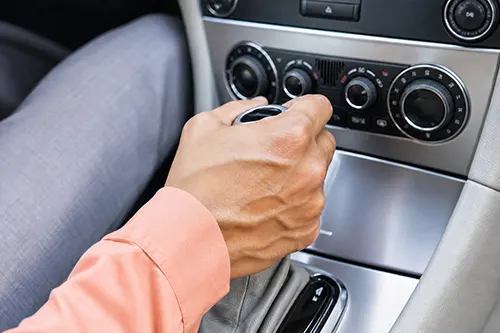
For many drivers of vehicles with automatic transmissions, a peculiar and recurring phenomenon appears as temperatures drop: a noticeably delayed 1-2 or 2-3 upshift during the first few minutes of driving on a cold morning. The engine revs higher than usual before finally engaging the next gear, yet the same behaviour vanishes once the transmission reaches operating temperature. Normal winter quirk, or the start of something more serious? Understanding the interplay between three factors—purely physical fluid viscosity, learned transmission adaptation, and electromechanical solenoid response—is key to separating ordinary cold-weather behaviour from an impending failure.
1. Fluid Viscosity – The Hydraulic Brake
Automatic transmissions rely on hydraulic pressure generated by the oil pump and regulated by valve body circuits. Transmission fluid, typically a multi-grade oil such as Dexron VI or Mercon LV, exhibits a dramatic increase in kinematic viscosity at low ambient temperatures. At -20°C, the fluid's viscosity can be ten times higher than at 80°C. That matters immediately. Thickened fluid flows more sluggishly through the narrow orifices, oil passages, and the torque converter. As a result, the pump struggles to build adequate line pressure quickly, while the added resistance inside the valve body slows the movement of spool valves and accumulators.
For an upshift to occur, a shift solenoid must open or close to redirect fluid to a clutch apply circuit. If the fluid is too thick, the clutch pack fills too slowly, causing a delay until sufficient pressure overcomes the viscous drag. This purely physical effect explains why the delay is strictly temperature-dependent and disappears after a few kilometres as friction warms the fluid. At first glance, that can look alarming. In many cases, though, it is just cold oil acting like cold oil.
2. Transmission Adaptation – The Learned Behaviour
Modern transmissions employ adaptive learning strategies. The transmission control module (TCM) continuously monitors shift times, turbine speed, and clutch fill rates via sensors. It adjusts solenoid duty cycles, pressure regulator settings, and clutch apply timing to maintain consistent shift feel. When cold fluid viscosity increases, the TCM detects that actual shift completion time exceeds the target. To compensate, it may temporarily increase line pressure or extend the solenoid activation period.
However, if the adaptation strategy is overly aggressive, or if the fluid is not of the specified viscosity grade, the TCM may overcompensate and produce perceptibly prolonged upshifts. Important here is that some vehicles store separate adaptation values for cold and warm operation. A corrupted or incompletely learned cold-region shift map can cause persistently delayed upshifts even after the fluid warms up, until a driving cycle forces re-adaptation. So if the delay keeps hanging around for more than 5-10 minutes of driving, the problem starts to look less like pure viscosity and more like an adaptation anomaly. That is where the pattern matters, maybe more than the symptom itself.
3. Solenoid Response – The Electrical Variable
Shift solenoids are electromechanical valves controlled by pulse-width modulated (PWM) signals from the TCM. At cold temperatures, several electrical and mechanical changes occur. First, the solenoid coil resistance decreases with cold metal, but the internal armature and return spring become stiffer. The magnetic force may be sufficient, yet the plunger’s movement slows because of increased mechanical friction and the same fluid viscosity effect inside the solenoid itself.
Second, some transmission designs use variable bleed solenoids (VBS) or force motors that directly regulate pressure. In that setup, cold, thick fluid can create a lag between the electrical command and the hydraulic output. Third, age-related issues such as a weakened solenoid spring, a worn spool, or a marginal electrical connector with higher cold resistance can make the delay worse. A healthy solenoid will still function well inside design limits even at -30°C. A borderline one may not. When that happens, the delayed upshift appears only in cold weather, which is exactly why it gets misread so often. If the problem persists after a fluid change and TCM reset, a solenoid response test with a scan tool becomes essential.
Diagnostic Differentiation – How to Identify the Culprit
To isolate whether viscosity, adaptation, or solenoid response is causing the delayed upshift, a systematic approach is required. What is important is not to jump straight to hard parts before checking the basics.
- Fluid check: Verify the transmission fluid level and condition. Burnt, degraded, or incorrect viscosity fluid (e.g., using Dexron III instead of low-viscosity Dexron VI) amplifies cold delay. Switch to the manufacturer’s recommended fluid—a fresh fill often resolves viscosity-based delays.
- Behaviour observation: If the delay only occurs on the very first upshift and then the transmission shifts normally after reaching 40-50°C fluid temperature, viscosity is the primary suspect. This is often considered normal. If the delay continues for 15 minutes or more, adaptation or solenoids are likely involved.
- Scan tool adaptation reset: Perform a TCM adaptation reset or "relearn" procedure using a professional diagnostic tool. If the delay disappears for a few cold starts but returns, the transmission may be relearning the same slow shift pattern because of an underlying hardware issue.
- Solenoid testing: Measure the resistance of each shift solenoid (typically 2-50 ohms depending on design). Compare with specifications at room temperature and near freezing. Also perform a solenoid actuation test with a bidirectional scanner—listen for a crisp click. A sluggish or intermittent click in cold conditions points to solenoid response degradation.
Summing Up – A Triad of Cold-Weather Effects
In most cases, a delayed upshift only on cold mornings is a normal consequence of increased fluid viscosity and the transmission’s adaptive compensation for that condition. Modern vehicles are calibrated to allow longer shift times below a certain temperature threshold to avoid harsh engagement. But when the delay becomes extreme—for example, the engine revs over 4000 RPM before shifting, or the transmission refuses to upshift for several kilometres—the diagnostic focus has to widen to include adaptation errors and failing solenoids.
The most practical first step is a complete fluid and filter change using the correct low-viscosity ATF. If the issue remains, resetting transmission adaptations and performing a solenoid response test will show whether the problem lies in the control electronics or in the hydraulic hardware. Ultimately, understanding the separate contributions of viscosity, learning algorithms, and solenoid electromechanics helps the technician avoid unnecessary repairs and resolve the cold-morning upshift delay with precision. And really, that is the whole point: not just fixing the symptom, but knowing why it showed up in the first place.