

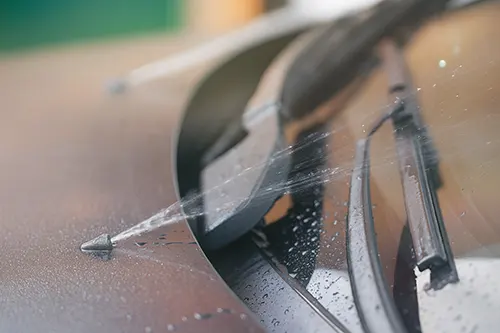
Few things are more frustrating than pulling the washer stalk and watching a sad, anemic trickle of fluid dribble onto your windshield—or worse, nothing at all. A proper washer system should deliver a strong, even spray that covers the glass in a fan or jet pattern, clearing dirt, salt, and bugs with ease. When that pattern degrades, you’re left with streaks, missed spots, and compromised visibility. The culprit is almost always one of three things: a clogged nozzle, a kinked or pinched hose, or a weakening pump. This guide will help you isolate the exact cause without guesswork, using simple diagnostic steps any car enthusiast can perform.
Understanding Your Windshield Washer System
Before diving into diagnostics, it helps to understand the basic components. The washer system consists of a reservoir (usually a translucent plastic tank under the hood), a small electric pump mounted in or on the reservoir, rubber hoses that carry fluid from the pump to the nozzles, and one or two nozzle assemblies (often adjustable) located on the hood, cowl, or wiper arms. When you activate the washer, the pump runs, pressurizing the fluid and forcing it through the hoses and out the nozzle orifices. A healthy system produces a consistent spray pattern—two to four streams or a fine mist depending on the nozzle design.
Problems manifest as weak flow, uneven streams, one side working while the other doesn’t, or complete failure. The key is to systematically isolate where the restriction or failure lies. The three main suspects—clog, kink, or pump—have distinct symptoms and test procedures.
Symptom Checklist: What Your Spray Pattern Is Telling You
Observe the spray behavior carefully. Different patterns point to different root causes:
- No fluid at all, but you hear the pump motor running: Likely an empty reservoir, a clogged pickup filter inside the reservoir, a kinked hose, or a completely blocked nozzle.
- Weak, slow dribble from one or both nozzles: Often a clogged nozzle, a partially kinked hose, or a pump losing pressure.
- Fluid sprays only a few inches or doesn’t reach the windshield: Usually a clogged nozzle orifice or a hose that has come loose or cracked.
- One nozzle works fine, the other is weak or dead: This isolates the problem to the hose or nozzle on the weak side—unlikely to be the pump, because the pump feeds both.
- Spray pattern is skewed or aiming too high/low: Nozzle misalignment, not a clog or pump issue (easily adjusted with a pin).
- Pump makes no sound at all: Electrical issue (blown fuse, bad relay, faulty switch) or a dead pump.
- Pump runs but sounds strained or changes pitch: Could be a clog forcing the pump to work against high resistance, or the pump failing internally.
Use this table as a quick reference:
| Symptom | Most Likely Cause | Confirmation Test |
|---|---|---|
| No fluid, pump silent | Blown fuse, bad switch, dead pump | Check fuse, test voltage at pump connector |
| No fluid, pump hums | Empty reservoir, clogged filter, kinked hose | Fill reservoir, disconnect hose at nozzle and test flow |
| Weak spray from both nozzles | Clogged nozzles or failing pump | Remove nozzles and test pump flow into a container |
| One nozzle weak, other fine | Clogged nozzle or kinked hose on weak side | Swap nozzles left/right to see if problem moves |
| Spray pattern irregular but strong flow | Nozzle misalignment or partial clog | Clean nozzle with pin or compressed air, then readjust |
Step-by-Step Diagnosis: Isolating the Culprit
Follow this logical sequence. You’ll need a helper, a small pin or paperclip, a container (like a water bottle), and possibly a multimeter.
Step 1: Check the Basics—Fluid and Fuses
It sounds obvious, but many “failures” are just empty reservoirs or frozen fluid in winter. Check the washer fluid level. If low, fill it with a quality windshield washer fluid (avoid plain water, which freezes and promotes algae growth that clogs nozzles). If the reservoir is full but nothing comes out, locate the fuse box (owner’s manual) and test the washer pump fuse. Replace if blown. Also listen for the pump: have a helper activate the washer while you listen near the reservoir. A silent pump means electrical or motor failure; a humming pump means mechanical/hydraulic restriction.
Step 2: Listen to the Pump’s Voice
With the ignition on (engine not necessarily running), activate the washer. A healthy pump produces a steady, consistent whirring sound. If the pump sounds labored, changes pitch rapidly, or clicks, it may be struggling against a clog. If it runs but the pitch is higher than normal, there might be air in the system (common after running dry) or a blockage that reduces flow. If the pump is noisy but fluid eventually comes out weakly, suspect a clogged nozzle or hose.
Step 3: Disconnect the Hose at the Nozzle
This is the most critical test. Locate the rubber hose that feeds the nozzle. Carefully pull it off the nozzle barb (some have a small clip or just a friction fit). Have a helper activate the washer while you aim the hose into a container. Observe the flow:
- Strong, steady stream (shoots out several inches): The pump and hoses are fine. The problem is the nozzle itself—clogged or misaligned.
- Weak trickle or intermittent flow: The issue is upstream—either a kinked hose, a clogged pickup filter, or a weak pump.
- No flow at all: Same as above, but more severe.
Step 4: Inspect the Hoses for Kinks, Cracks, or Pinches
Follow the rubber hoses from the pump to the nozzles. Look for sharp bends, especially near hood hinges where hoses are often pinched when the hood closes. Also check for cracks or disconnected sections. A common failure point is the rubber connector where the hose transitions from the body to the hood—these can crack with age. If you find a kink, straighten it and secure it with a zip tie or reroute slightly. If the hose is cracked, cut out the damaged section and rejoin using a small plastic barbed connector (available at any auto parts store).
Step 5: Test the Pump Directly (Disconnect Output Hose)
To rule out hoses entirely, locate the pump on the reservoir. Disconnect the output hose from the pump (not just at the nozzle—the hose right at the pump outlet). Have a helper activate the washer while you direct the pump outlet into a container. A healthy pump should produce a forceful, continuous stream (about 100-200 ml in 10 seconds). If the flow is weak even with no hose attached, the pump is failing. If the flow is strong but the earlier test at the nozzle was weak, the problem is a clogged or kinked hose between the pump and nozzle.
Step 6: Clean or Replace the Nozzle
If you’ve confirmed strong flow at the hose but poor spray from the nozzle, the nozzle is clogged. Remove the nozzle (usually pops up or is held by a small clip). Soak it in vinegar or a 50/50 white vinegar and water solution for an hour to dissolve mineral deposits. Then use a fine pin or a specialized nozzle cleaning tool to gently probe each orifice. Do not use a needle that’s too thick—you can enlarge the hole and ruin the pattern. Flush the nozzle backward with compressed air or a syringe filled with water. Reinstall and test. If cleaning doesn’t restore a proper pattern, replace the nozzle (they are inexpensive, often under $10).
Special Cases: Dual Nozzles, Heated Washer Systems, and Rear Washers
Many vehicles have separate nozzles for driver and passenger sides. If only one side fails, swap the nozzles left-to-right. If the problem follows the nozzle, it’s clogged. If the problem stays on the same side, the issue is the hose or a check valve (some vehicles have one-way valves to prevent fluid drainback; these can stick closed). Rear washer systems use longer hoses that run through the vehicle interior—these are prone to kinking or being crushed by cargo. Diagnosis is the same: disconnect at the rear nozzle and test flow.
Heated washer nozzles (common in cold climates) have an electrical connector. If those fail, you’ll still get fluid, but the heating element won’t de-ice the nozzle. That’s a separate issue not covered here.
Pump Weakness vs. Clog: How to Tell for Sure
Sometimes the pump is simply getting old. Electric washer pumps are small impeller pumps. Over time, the impeller wears, magnets weaken, or internal seals leak, reducing pressure. A weak pump will produce adequate flow with no hose attached, but once you add the resistance of the nozzle (which is designed to create spray), the flow drops dramatically. To test, measure the flow rate at the pump outlet (no hose) vs. at the nozzle (with hose attached). If the pump outlet flows, say, 200 ml in 10 seconds, but the nozzle only dribbles, the issue is hose/nozzle restriction. If the pump itself flows only 50 ml in 10 seconds, the pump is weak and should be replaced.
Another sign of pump weakness: the spray pattern is fine for the first second, then quickly degrades to a trickle. That indicates the pump can build initial pressure but can’t sustain it.
Preventive Maintenance: Keeping Your Washer System Healthy
Once you’ve fixed the problem, adopt these habits to avoid repeat failures:
- Use quality washer fluid year-round. Avoid mixing different brands or types (some react and form gels). In winter, use fluid rated for at least -20°F (-29°C).
- Never use plain tap water. Minerals will clog nozzles over time, and algae can grow in stagnant water.
- Run the washer for a few seconds weekly even in good weather to keep the pump seals lubricated and prevent fluid from settling and clogging.
- Inspect hoses during oil changes. Look for cracks, kinks, or loose connections near hood hinges.
- Keep the reservoir covered and clean. Dirt and debris can enter through the cap and clog the pump’s intake screen.
When to Call a Professional
Most washer system repairs are DIY-friendly, but there are exceptions. If you’ve confirmed the pump is receiving voltage (test with a multimeter) but it doesn’t run, replacement is straightforward (usually one bolt and a hose clamp). However, if the issue is electrical (broken wire, faulty column switch), or if you have a complex system with multiple valves and sensors (some luxury cars), it may be worth consulting a mechanic. Also, if you remove the pump and find the reservoir’s internal filter is clogged with slime, cleaning the reservoir requires removing it, which can be time-consuming on some vehicles.
Conclusion: Restore Crystal-Clear Visibility in Minutes
A poor windshield washer spray pattern is rarely a mystery. By following the systematic approach of disconnecting at the nozzle, testing flow, inspecting hoses, and cleaning or swapping components, you can pinpoint whether the culprit is a clog, a kink, or a weak pump in under 15 minutes. Most fixes cost less than $20 and require only basic hand tools. The reward is a windshield that clears instantly, improving safety and driving pleasure. Next time your washer fluid dribbles instead of sprays, you’ll know exactly where to look.
Final tip: After fixing the issue, adjust your nozzle aim. Use a small pin to gently move the nozzle ball or slot. Aim the spray to hit the middle of the windshield on the driver’s side, slightly lower on the passenger side. Test at highway speeds if possible—airflow can push the spray upward. With a properly working system, every drive will be safer and more enjoyable.