

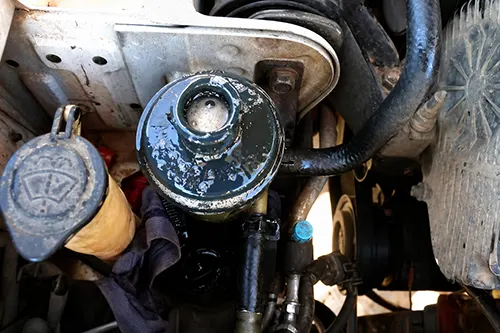
You pop the hood after a long drive, maybe to top up the windshield washer fluid, and notice something unsettling: the power steering fluid reservoir is full of frothy, milky‑looking fluid. If you’ve been hearing a whining or growling noise from the pump when you turn the wheel, you’re already in the danger zone. Foamy power steering fluid is not just an aesthetic issue—it’s a clear warning that the hydraulic system is ingesting air. And air, unlike incompressible fluid, will destroy the pump’s ability to generate pressure, leading to hard steering, pump cavitation, and eventually a $500+ pump replacement. In this guide, I’ll walk you through the three main culprits (air ingress, low fluid level, and a leaky return line) and show you exactly how to diagnose the problem safely, using tools and techniques that any home mechanic can master.
Why Foam Is the Enemy of Your Power Steering System
Power steering fluid is designed to be a non‑compressible hydraulic medium. When the pump spins, it pushes this fluid through the steering gear (rack and pinion or recirculating ball) to assist your steering effort. Air, however, compresses easily. When air mixes with the fluid, the pump compresses the bubbles instead of moving fluid, which:
- Creates a loud whining or chirping noise (pump cavitation).
- Reduces or completely eliminates steering assist.
- Overheats the fluid because of internal pressure spikes.
- Damages pump internals (vanes, cam ring, bearings) and can blow seals elsewhere in the system.
Once you see a frothy, strawberry‑milkshake‑like fluid (sometimes with tiny air bubbles clinging to the dipstick), you must act immediately. Ignoring it will turn a simple bleeding procedure into a full hydraulic system rebuild.
The Three Usual Suspects: Air Ingress, Low Level, Return‑Line Leak
Foaming never appears out of nowhere. It’s always a symptom of one – or a combination – of these three root causes. Understanding each one will help you focus your diagnosis.
1. Air Ingress (Sucking Air on the Low‑Pressure Side)
Any leak or loose connection between the reservoir and the pump inlet (the suction hose) will allow air to be drawn into the pump. The pump is very efficient at mixing that air into a froth. Common spots include:
- Loose or cracked supply hose from reservoir to pump.
- Worn or missing O‑ring on the pump inlet fitting.
- Cracked reservoir or faulty reservoir cap (cap must allow venting but also maintain slight vacuum integrity).
- Low fluid level that uncovers the inlet port inside the reservoir.
2. Low Fluid Level (The Simplest Cause)
When fluid drops below the minimum mark, the pump sucks air directly from the reservoir. Even a pint low can cause foam. Low level often accompanies an external leak somewhere else (hose, rack seal, cooler line).
3. Return‑Line Leak (Pressure‑Side Leak After the Pump)
The return line carries fluid from the steering gear back to the reservoir. A leak on this line – even a tiny pinhole – will not necessarily drip on the ground immediately; instead, it can suck air into the return stream because the return side operates under slight vacuum from the pump’s suction. Air then mixes with fluid in the reservoir, creating foam. Return‑line leaks are the most overlooked cause of persistent foaming after bleeding.
Tools You’ll Need Before You Start
Safety first. Power steering systems get hot, and fluid is flammable. Gather these items:
- Safety glasses and nitrile gloves.
- Clean funnel and a drain pan.
- Correct power steering fluid (check owner’s manual; many use ATF Dexron III, others require specific PS fluid).
- Flashlight and a small mirror for hard‑to‑see hoses.
- Jack and jack stands (if you need to reach under the vehicle).
- Torque wrench for hose clamps (if replacing lines).
- Optional: mechanic’s stethoscope to pinpoint air noise at the pump.
Safe Step‑by‑Step Diagnostic Procedure
Follow this order to identify the source without causing additional damage.
Step 1 – Cold Visual Inspection (Engine Off)
Park on a level surface, let the engine cool for at least an hour. Remove the reservoir cap and use a clean dipstick or flashlight to inspect fluid condition:
- Normal color: Red or clear amber.
- Foamy appearance: confirm bubbles; if fluid looks like a milkshake, you also have water contamination (separate issue).
- Check level: mark the cold level. Low? Then you have an external leak somewhere.
Clean the cap and its vent hole (if present) – a clogged vent can cause vacuum in the reservoir, pulling air past seals.
Step 2 – Inspect the Entire System for Leaks (Dry and Wet)
With the engine still off, use a bright light to examine:
- Return line (typically a low‑pressure rubber hose from the rack back to the reservoir). Look for cracks, swollen sections, or wet spots. Pay special attention to the connection at the rack – a common leak point.
- Supply (suction) hose from reservoir to pump. If it’s soft, age‑cracked, or the clamp is loose, air will be sucked in.
- High‑pressure line fittings – these rarely suck air but can leak fluid, leading to low level.
- Rack boots – if torn and full of fluid, the internal rack seal has failed, causing low level and eventual foam.
Step 3 – Perform the “Paper Towel Return‑Line Test”
This is the most effective way to diagnose a return‑line leak that sucks air:
- Wrap a clean, white paper towel around the return hose, especially near the reservoir connection and any clamps.
- Start the engine and let it idle. Turn the steering wheel lock‑to‑lock 3‑4 times (this raises system pressure).
- Shut off engine and inspect the paper towel. Do you see any wetness or bubbles? A return‑line leak will produce very fine, foam‑like wet marks or even visible air bubbles being drawn in at the fitting.
- If the towel is dry but foam still appears, the leak is likely on the suction side or the fluid level is too low.
Note: Never use your bare hand to feel for leaks on a running system – fluid under pressure can inject into your skin, causing severe injury.
Step 4 – Check the Reservoir Baffle and Pickup Tube
Some reservoirs have an internal baffle or a pickup filter. Remove the reservoir (if easy to access) and inspect:
- Clogged filter screen causing cavitation.
- Dislodged pickup tube that sits above the fluid level when the engine is revved.
This step is advanced, but on many GM and Ford vehicles, a degraded reservoir is the root cause of chronic foaming.
Quick reference: Causes and Symptoms
| Cause | Typical Symptoms | How to Confirm |
|---|---|---|
| Low fluid level (external leak) | Foam, groaning pump, steering heavy, visible drips under car | Top up fluid; foam disappears temporarily. Leak found with UV dye or visual. |
| Suction hose leak (air ingress) | Persistent foam even when full, noisy pump, fluid may look normal color but bubbly | Spray soapy water on suction hose with engine running – look for bubbles being sucked in. |
| Return‑line leak sucking air | Foam appears shortly after driving, no major external drip, fluid may be aerated | Paper towel test above; or submerge the return hose end in a container of fluid – if bubbles appear at the reservoir, line is leaking. |
| Defective reservoir cap or baffle | Foam only at high RPM, fluid level normal, no external leaks | Swap with known‑good cap; disassemble and inspect pickup tube. |
How to Safely Bleed Air Out of the Power Steering System
Once you repair the underlying leak (replace hose, tighten clamp, or fix return line), you must remove the trapped air. Never run the system foamy for long – it will destroy the pump.
- Raise the front wheels off the ground using jack stands. This removes load from the steering.
- Top off fluid to the cold full mark with the correct fluid.
- Engine off: Turn the steering wheel slowly from lock to lock 10‑15 times. This pushes air up into the reservoir.
- Start engine and let idle. Turn wheel lock‑to‑lock 5 times. Shut off engine, check fluid, and refill if needed. Repeat until no foam appears and the fluid stays clear.
- Final check: With engine running, look for tiny bubbles in the reservoir – they should disappear within 2‑3 cycles. If foam returns, you still have a leak.
Pro tip: Use a vacuum bleeder (hand pump with reservoir adapter) to pull air out of the fluid – this is the fastest and cleanest method on modern cars.
Preventing Future Foaming: Maintenance Rules
- Flush power steering fluid every 2 years or 30,000 miles. Old fluid breaks down and promotes foaming.
- Replace soft or bulging return hoses proactively – they are cheap and often the hidden culprit.
- Don’t hold the steering at full lock for more than 5 seconds – that forces the pump into pressure relief and can cause aeration.
- Inspect reservoir cap seal – a hardened seal can’t maintain proper system vacuum.
Final Verdict: Do Not Ignore the Foam
Foamy power steering fluid is never normal. In my three decades of wrenching, I’ve seen countless drivers ignore the whining pump until the vanes shatter, sending metal fragments through the entire system. A simple $10 hose clamp or a $15 O‑ring can prevent a $1000 repair. The diagnostic process is straightforward: check the fluid level first, then inspect the return line, then move to the suction side. Use the paper towel test – it works every time. Bleed thoroughly after any repair, and your steering will return to whisper‑quiet, precise operation. Drive safe, and keep that fluid bubble‑free.
Remember: Always consult your vehicle’s service manual for specific bleeding procedures and fluid specifications. When in doubt, a professional with a pressure tester can pinpoint the exact entry point of air within minutes.