

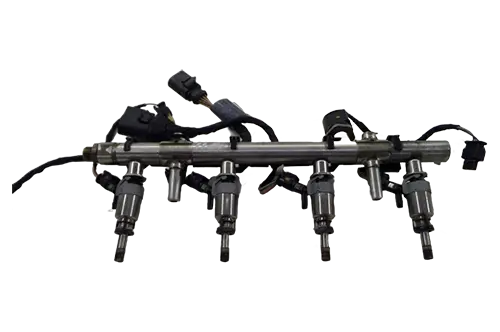
Rough idle, misfire on one cylinder, or fuel smell on your VW Jetta (2011–2018) 2.0L or 1.4 TSI? A clogged or leaking injector is often the cause. This guide shows how to test injectors, when cleaning works vs when replacement is necessary, and the install procedure that prevents vacuum leaks.
Owner's case
Sam's 2014 Jetta 1.4 TSI had P0301 (cylinder 1 misfire); swapped coil and plug—no change. Injector resistance and flow test showed cyl 1 injector was 20% low on flow and leaking at the seal.
Symptoms
- Misfire codes (P0300–P0304) that don't clear with new plugs/coils
- Rough idle that smooths out at higher RPM
- Fuel smell in the engine bay; black soot around injector seats
- Long-term fuel trims heavily negative on one bank (over-fueling)
Quick tests
- Resistance: key off, unplug injector, measure across pins—spec ~12–16 Ω (verify for your engine). Open circuit or short = bad.
- Balance test (scan tool): command each injector on/off; watch RPM drop—should be similar across all cylinders.
- Flow test (bench): requires injector tester; compares spray pattern and volume. Clogged injectors show weak/uneven spray.
Cleaning vs replacement
- Cleaning (ultrasonic or on-car): if resistance is OK and flow is only mildly reduced (~10–15%). Often restores performance.
- Replacement: if resistance is off-spec, flow is severely reduced, or seals/o-rings leak fuel externally.
Replacement on Jetta 1.4 / 2.0L
- Relieve fuel pressure (pull fuse, run engine until it dies).
- Disconnect battery; remove engine cover.
- Unplug injector connectors (press tab, wiggle gently).
- Release fuel rail bolts (2–3 Torx); lift rail with injectors attached.
- Remove injector clips; twist and pull injectors from rail.
- Install new injectors with new O-rings lubed with a drop of clean fuel; press firmly into rail.
- Reinstall rail; torque bolts per spec (light—aluminum intake).
- Reconnect connectors and battery; cycle key on/off 3 times (prime fuel system).
After the fix
- Start engine; check for fuel leaks at injector seals.
- Clear codes; road test; verify misfire counters stay at zero.
- Re-check fuel trims after a full drive cycle—should normalize.
Sam's outcome
Replaced cyl 1 injector; P0301 cleared and stayed gone. Idle smoothed out; fuel smell disappeared. Cost: $65 OEM injector, 1 hour DIY.
Tools
- Torx set (T25, T30), fuel line disconnect tool if applicable
- Multimeter, scan tool with live data
- Catch pan, nitrile gloves, safety glasses
For Jetta fuel system diagrams and injector specs
Check VW 7zap: volkswagen.7zap.com.
Common mistakes
- Replacing injectors without relieving pressure—fuel spray risk.
- Reusing old O-rings—vacuum leaks and rough idle return.
- Not clearing adaptation after injector replacement—ECU may hold old trim values.
Cleaning service (when to try it first)
If all injectors test within resistance spec but flow is mildly reduced, a professional ultrasonic cleaning service (~$20–40/injector) can restore them. Sam's mechanic offered this but flow test showed one injector too far gone—replacement was the right call.
Bottom line: Jetta injector faults are testable; prove which cylinder, measure resistance and flow, then clean or replace based on data—Sam's misfire is history.
Sam's follow-up (500 miles later)
Cylinder 1 misfire stayed cleared; fuel trims normalized within 3 drive cycles. Idle is smooth even in traffic. He kept the old injector—tested it on a bench; confirmed 18% flow reduction and visible drip at the seal.
Practical section
- Can I clean injectors on the car? Some fuel system cleaners help mildly clogged injectors; for heavy deposits, ultrasonic cleaning or replacement is needed.
- All 4 at once? Only if multiple show flow issues; otherwise fix the confirmed bad one.