

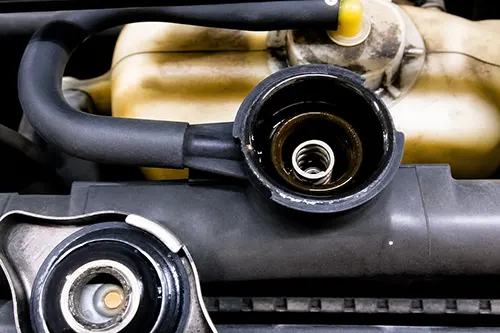
You check your coolant levels before a long road trip, and something feels off. The radiator—the heart of your engine's cooling system—keeps ending up low, no matter how often you top it up. Meanwhile, the translucent overflow bottle, also called the coolant reservoir or expansion tank, looks suspiciously full and sometimes even spills onto the ground. You replace the coolant, burp the system, maybe even swap the thermostat, and still the problem comes back. So what’s actually happening here? Is it a simple radiator cap failure, a stubborn air pocket trapped in the block, or something far more sinister like a head gasket leak?
As a longtime automotive enthusiast, I've chased this exact gremlin on everything from a classic Chevy small-block to a modern turbocharged German sedan. The symptoms can be maddening: the engine may run at a normal temperature at speed, but the heater blows cold at idle, the temperature gauge starts creeping up in traffic, and you keep adding coolant to the radiator while the overflow bottle burps and bubbles like a boiling pot. This guide walks through every likely cause, from the 50-cent fix to the thousand-dollar repair, and helps you diagnose the problem with some confidence before you start throwing parts at it.
How a Coolant System Should Work: The Recovery Basics
Before diagnosing the abnormal, you need to understand the normal. Modern cooling systems are closed, pressurized circuits designed to manage thermal expansion. As the engine warms up, the coolant expands. When pressure exceeds the rating of the radiator cap, typically 13–16 psi, the cap's pressure relief valve opens and allows excess coolant to flow through the overflow tube into the reservoir. As the engine cools, the coolant contracts, which creates a vacuum. The radiator cap's vacuum valve then opens, drawing coolant back from the reservoir into the radiator. This cycle repeats thousands of times over the life of your vehicle.
What should you see in a healthy system? The overflow bottle should have coolant at the "cold full" mark when the engine is cool. The level rises slightly when hot, then returns to the cold mark after shutdown. The radiator, when cool, should be completely full to the brim. That constant back-and-forth keeps the radiator free of air pockets and lets the system stay pressurized for a higher boiling point and efficient heat transfer. Any break in that pattern—overflow bottle filling while the radiator stays low—points to a failure somewhere in the cycle. Simple on paper. Annoying in real life.
Primary Suspect #1: The Radiator Cap – A Cheap Fix That’s Often Overlooked
The radiator cap is probably the most underrated component in the cooling system. It is a precision pressure valve and vacuum valve packed into one small part. When it fails, the symptoms can look an awful lot like catastrophic engine trouble. Here’s what happens:
- Weak or broken pressure spring: The cap can't hold system pressure. Coolant boils at a lower temperature, and excess coolant gets pushed into the overflow bottle at normal operating temperatures. The bottle fills, but the radiator loses coolant because the cap never lets the vacuum side work properly.
- Damaged vacuum valve (the small rubber disc in the center): When the engine cools, the cap cannot draw coolant back from the bottle. The radiator stays low, and the overflow bottle remains full. This is the classic "radiator empty, bottle full" scenario.
- Worn or cracked rubber seal: Air gets sucked into the radiator instead of coolant. You'll hear a hissing sound or see tiny bubbles in the overflow bottle when the engine is shut off.
Quick cap test: With the engine cold, remove the cap and inspect the rubber seals for cracks, hardness, or debris. Squeeze the large spring—it should feel firm. Better yet, use a pressure tester on the cap; any auto parts store loans them. The cap should hold its rated pressure for at least 30 seconds. If it leaks or the vacuum valve is stuck, replace it. Caps cost under $15. It is worth noting that buying a quality brand—Stant, Gates, OEM—matters here, because cheap knockoffs can fail in weeks.
Primary Suspect #2: Stubborn Air Pockets (The Silent Coolant Thief)
Air pockets, or "vapor locks," are especially common after a coolant flush, thermostat replacement, or water pump job. Air is compressible, while coolant is not. An air pocket trapped in the engine block, heater core, or radiator interferes with proper flow and heat transfer. But can trapped air really make the overflow bottle fill? Absolutely. The sequence usually goes like this:
- Air pocket sits near the cylinder head or thermostat housing.
- Engine warms up, and the air expands far more than coolant would.
- That expansion pushes coolant past the radiator cap and into the overflow bottle.
- When the engine cools, the air contracts, but the vacuum created isn't strong enough to suck coolant back – or the air pocket simply remains, blocking the return path.
- Result: Overflow bottle full, radiator low.
How to identify an air pocket: Look for intermittent heater output, hot then cold, gurgling sounds from the dashboard, erratic temperature gauge readings, and the need to "burp" the system more than once. Air pockets show up more often in vehicles with bleeder screws on the thermostat housing or intake manifold. Some engines, like the Ford 4.6L V8 or BMW M54, are notorious for trapping air unless you follow a very specific filling procedure.
Proper bleeding method: Park the vehicle on an incline with the radiator cap at the highest point. Use a spill-proof funnel; honestly, it’s a game-changer tool. Run the engine with the heater on full blast. Squeeze the upper radiator hose to help air bubbles escape. Rev the engine lightly to increase water pump flow. Patience is key, because bleeding air can take 20–30 minutes. If the problem keeps returning, you may be dealing with a slow coolant leak that introduces fresh air every cycle.
Beyond the Cap and Air: Other Mechanical Culprits
If a new radiator cap and a thorough bleeding procedure don’t solve the issue, move your inspection downstream. Several other components can create almost the same symptoms.
3. Pinhole Leak or Slow Coolant Loss
Any small leak—a weeping water pump seal, a cracked radiator end tank, a loose hose clamp—lets coolant escape when the system is hot and under pressure. When the engine cools, instead of pulling coolant back from the overflow bottle, the system draws in air through that leak point. The air builds up, displaces coolant, and the cycle repeats. The overflow bottle may remain full because the cap's return valve is working, but there is simply less liquid in the system overall. Pressure test the system, both cold and hot, to uncover hidden leaks. And don’t forget the heater core; a wet passenger floor mat is a dead giveaway.
4. Failing Water Pump (Especially Impeller Issues)
A water pump with a cracked or eroded impeller, something seen on some plastic-impeller pumps like BMW or GM LS engines, may not circulate coolant effectively at idle or low RPM. Coolant in the block gets superheated, boils locally, and steam pushes coolant into the overflow bottle. At higher RPMs, the pump may move enough fluid to keep temperatures normal, which can mask the problem for a while. Diagnosis is fairly straightforward: monitor temperature at idle, then use an infrared thermometer on the radiator inlet and outlet. A difference over 20°F suggests poor flow.
5. Thermostat Stuck Closed or Opening Late
A thermostat that does not open fully causes the engine to overheat and build excessive pressure. The cap vents more coolant than normal into the overflow bottle, but when the system cools, the thermostat may still be stuck and keep return flow from happening. Usually, you’ll see overheating symptoms along with the bottle-filling issue. Check the upper radiator hose as the engine warms up—it should get hot gradually. If it stays cold while the temperature gauge climbs, the thermostat is likely the culprit.
| Symptom | Most Likely Cause | Diagnostic Test |
|---|---|---|
| Bottle full, radiator low, no overheating | Radiator cap vacuum valve failed | Cap pressure test / replace cap |
| Bottle full, radiator low, gurgling sounds | Air pocket after recent service | Bleed system with spill-proof funnel |
| Bottle full, radiator low, coolant smell but no visible leak | Pinhole leak or head gasket seepage | Pressure test & combustion leak test |
| Bottle full, radiator low, fluctuating temperature | Failing water pump or stuck thermostat | Check hose temps, flow test |
| Bottle overflows when revving, white smoke from exhaust | Head gasket failure (combustion gases) | Block tester (blue fluid test) |
The Dark Side: Head Gasket Failure – The One You Fear
No one wants to hear "head gasket," but yes, it’s a real possibility, especially on high-mileage engines or engines that have already been overheated. A small breach between a combustion chamber and a coolant passage forces exhaust gases into the cooling system. Those gases pressurize the coolant far beyond the radiator cap's rating, relentlessly pushing coolant into the overflow bottle and often out onto the ground. Shut the engine off, and the gases contract, but the system now contains less coolant and more air. The radiator winds up low, and the cycle gets worse with every drive.
How to confirm head gasket failure without tearing the engine apart:
- Combustion leak test (block tester): A fluid-filled tester placed over the radiator neck changes color from blue to yellow/green if exhaust gases are present. This is definitive.
- Compression test and leak-down test: Low compression on adjacent cylinders or bubbles in the radiator during the test.
- White smoke from exhaust: Coolant burning in the combustion chamber produces sweet-smelling white vapor.
- Milky oil (chocolate milkshake): Coolant mixing with oil – check the dipstick and oil filler cap.
If you have any of those signs, stop driving immediately. What is important here is that driving with a blown head gasket can warp the cylinder head, damage bearings, and destroy the engine. Professional repair typically runs $1,500–$3,000, but catching it early may save the head from cracking.
Step-by-Step Diagnosis: From Simplest to Most Complex
To avoid wasting money on unnecessary parts, follow a logical flow instead of guessing.
- Let the engine cool completely (overnight). Open the radiator cap slowly, using a rag. Is the radiator low? Note how much coolant is missing.
- Inspect the overflow bottle. Is it above the "full hot" mark? Do you see any signs of an oil slick or bubbles?
- Replace the radiator cap with a known-good OEM-spec cap. This is the cheapest and most common fix. Drive for a day and check again.
- Pressure test the cooling system. Pump it to the cap pressure rating. Watch for pressure drop over 10 minutes. If it drops, track down the leak with a flashlight and mirror.
- Bleed the system properly. Even if you think there’s no air, do a full bleed procedure with the heater on.
- Perform a combustion leak test. You can get one at any parts store. If gases are present, a head gasket is likely.
- Check for uneven cylinder compression. Rent a compression tester. Adjacent low cylinders point to head gasket trouble.
- Thermostat and water pump inspection. If everything else checks out, consider these as flow-related causes.
Real-World Examples: Why Experience Matters
I once helped a friend with a 2002 Subaru Outback that showed this exact symptom: the overflow tank kept filling, and the radiator was always low. Three mechanics quoted head gasket jobs at $2,200. I replaced the $8 radiator cap. Problem solved instantly. On the other hand, a neighbor's Ford F-150 had the same basic symptom, but with white smoke. That one really was a blown head gasket. At first glance, both cases looked similar, and that’s the trap. The cap test costs almost nothing, so start there every time.
Another case involved a Mazda MX-5 after a coolant flush. The owner couldn’t get the heater to blow hot, and the overflow bottle kept filling. The issue turned out to be an air pocket trapped in the heater core. After 45 minutes of burping the system with a spill-proof funnel and raising the front of the car, the heater worked perfectly and the coolant levels settled back to normal.
Prevention and Long-Term Maintenance
Once you solve the immediate issue, a few simple habits can help keep it from coming back:
- Replace the radiator cap every 3–4 years or 50,000 miles. The rubber degrades.
- Use the correct coolant type (G12, G48, Asian red, etc.) – mixing coolants can cause gelling and blockages.
- Bleed the system any time you open the cooling circuit, even for a minor hose repair.
- Check overflow bottle hoses for cracks; a tiny split can introduce air.
- Never remove the radiator cap when the engine is hot. You risk severe burns and a sudden coolant eruption that can warp components.
Summing Up: Don’t Panic, Diagnose
A coolant overflow bottle that fills while the radiator stays low is frustrating, but it’s rarely the end of the world. Start simple, with the radiator cap. Then move on to bleeding and pressure testing. Only after those are ruled out should you start worrying about head gaskets. With a systematic approach and a few basic tools, you can usually pinpoint the cause in an afternoon. It is noteworthy that a properly functioning cooling system is basically a pressurized, balanced ecosystem. When that balance gets thrown off, your car is telling you something. Better to listen before you end up stranded on the side of the road with steam pouring from under the hood.
Final tip: Keep a spare radiator cap in your glove box. For less than the cost of a pizza, it’s one of the best bits of roadside insurance you can buy for your cooling system.