

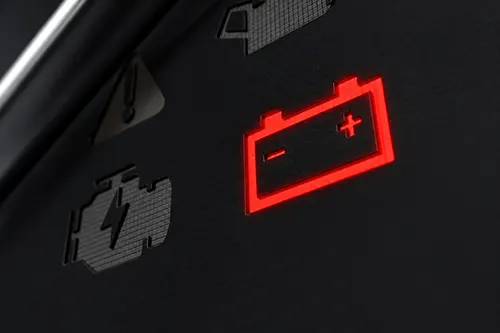
Battery Dies After Sitting Three Days: Normal Standby Draw or Something You Should Chase?
You walk out to your car after a long weekend, turn the key, and get nothing but a faint click—or total silence. The battery is dead again, after sitting only three days. So what is it: a battery on its way out, or an electrical gremlin slowly draining power while the car sits? Knowing the difference between normal parasitic draw and a real problem that needs attention can save you from getting stranded, and just as important, from swapping parts for no reason.
What Is a Normal Key-Off Battery Drain?
All modern vehicles use a small amount of electricity even when the ignition is off. That’s called parasitic draw, or key-off drain, and it keeps basic memory functions alive, including:
- Engine control module (ECM) keep-alive memory
- Clock and radio station presets
- Security system and keyless entry receiver
- Body control module monitoring for remote start commands
For the vast majority of production vehicles built in the last two decades, an acceptable parasitic draw is typically below 50 milliamps (0.050 amps). Many newer cars with more networked modules may settle between 50 and 85 mA after all modules have entered sleep mode, and that can take anywhere from a few minutes to over an hour. Anything that stays above that range consistently is cause for investigation. At first glance it may not sound like much, but small current adds up.
The Math: How Fast Will a Good Battery Drain?
Let’s assume a healthy, fully charged 70 Ah (ampere-hour) lead-acid battery. At a normal 50 mA (0.05 A) draw, the theoretical time to 50% depth of discharge is:
70 Ah × 0.5 ÷ 0.05 A = 700 hours, or roughly 29 days.
Even at a 100 mA draw, you should still get about two weeks of sitting time before the battery struggles to crank the engine. If your battery dies in three days, the parasitic draw is either far above the normal threshold, or the battery itself has lost capacity and can no longer hold a charge effectively. Three days to a no-start condition often points to a draw in the range of 0.5 to 1.5 amps, which is ten to thirty times the acceptable limit. That’s not a small miss. It’s a big one.
Common Causes of Excessive Parasitic Draw
Before deciding the battery is bad, do a systematic check. A lot of intermittent or user-influenced issues can create more draw than they should:
- Aftermarket accessories improperly wired: Dash cameras, phone chargers, GPS trackers, or aftermarket alarms connected to a constant 12V source instead of a switched ignition circuit.
- Glove box, trunk, or underhood light staying on: A pin switch failure or a bulb that remains illuminated when the lid is closed can pull 1–2 amps continuously.
- Module that fails to enter sleep mode: A faulty door latch sensor, hood switch, or failing body control module can prevent the vehicle’s network from going to sleep, keeping multiple modules awake.
- Sticky relay or failing diode: A relay that welds itself closed or an alternator with a leaking diode can create a direct path to ground, draining the battery even with the key off.
- Infotainment or telematics system hang: Some vehicles have been plagued by software glitches where the head unit or telematics module keeps communicating on the CAN bus, spiking draw to 2 amps or more.
How to Test and Diagnose
A proper diagnostic approach avoids guesswork. You’ll need a digital multimeter capable of reading DC amps, preferably one with a min/max recording function.
- Prepare the vehicle: Ensure all accessories are off, doors closed, and the key is removed. If the car has a passive entry system, keep the key fob out of range so the vehicle doesn’t wake up. Open the hood and manually latch the hood switch to simulate a closed hood.
- Connect the meter in series: Disconnect the negative battery terminal. Connect one meter lead to the battery negative post and the other to the disconnected negative cable clamp. Use alligator clips for a secure connection. Set the meter to the 10A DC current range initially.
- Let modules go to sleep: This part is critical. Depending on the vehicle, it can take 30–60 minutes for all modules to time out. Watch the meter reading drop over time. Do not open doors or trigger any inputs during this period.
- Record the stable draw: Once the current stabilizes, note the reading. If it is well above 85 mA, or the manufacturer’s specified limit, start pulling fuses one at a time while watching the meter for a significant drop. Begin with aftermarket circuits, then move to major systems like body control, infotainment, and alternator circuits.
- Interpret the results: The circuit that causes the draw to drop to a normal range is the one containing the fault. From there, consult a wiring diagram to isolate the exact component or wiring issue.
Could It Just Be a Weak Battery?
Yes—and pretty often it’s a combination of a slightly elevated draw and a battery that has lost capacity. A battery that sulfated due to age or chronic undercharging might have only 20–30% of its original capacity left. In that situation, even a normal 50 mA draw could kill it in a few days. Always start by fully charging the battery and having it load-tested at a shop or with a conductance tester. If the battery fails, replace it and retest the draw. Don’t go chasing a phantom drain with a battery that can’t hold a charge. That just wastes time.
Seasonal and Situational Factors
Cold weather reduces available cranking amps, which makes a weak battery show itself faster. A three-day no-start in winter might stretch to a week in summer. Frequent short trips can do the same kind of damage in a quieter way, because the alternator never gets enough time to replenish the energy used during starting. The result is a battery that lives in a perpetually low state of charge. A battery maintainer might hide a moderate draw, but it does not fix the root cause. Important, because people do mix those two things up.
When to Seek Professional Help
If you’ve confirmed a draw over 85 mA and still can’t locate the circuit by pulling fuses, it may be time for a professional technician. A shop can do a more advanced diagnosis with a DC current clamp and a scan tool to monitor module status. Some intermittent draws—like a module waking up every few minutes—need an oscilloscope or a data-logging meter to catch. It is worth noting, too, that some vehicles have a “transport mode” or extended sleep programming that must be enabled with a diagnostic tool to achieve the true minimum draw.
The Bottom Line
A battery that dies after sitting for only three days is not normal. While a failing battery can mimic a draw, a healthy electrical system should keep the vehicle startable for at least two to three weeks. If you measure a key-off drain above 85 mA after the vehicle has fully gone to sleep, you need to find and fix the circuit responsible. Ignore it, and you’re not just risking a dead battery—you’re also stressing the alternator, shortening battery life, and setting yourself up to get stranded at the worst possible time. Summing up, this is a problem worth chasing now. Otherwise you’ll keep chasing jump-starts later.