

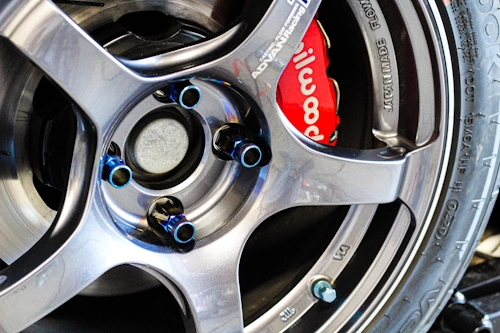
As the wheels meet the road, there's an unsung hero ensuring this critical connection remains secure: the humble lug nut. These small yet vital components bear the tremendous responsibility of keeping your wheels attached to your vehicle. After three decades of automotive journalism and countless track days, I've witnessed firsthand the catastrophic consequences of overlooking these seemingly insignificant fasteners. This comprehensive guide delves into everything you need to know about lug nut sizes, types, and installation practices to keep you safely on the road.
The Unsung Heroes of Wheel Security
Lug nuts are precision-engineered fasteners that secure your vehicle's wheels to the hub assembly. Despite their modest size, they endure extraordinary stresses—from the torque of acceleration and the punishment of potholes to the lateral forces of cornering. Passenger vehicles typically feature between four and eight lug nuts per wheel, with smaller cars often having fewer and larger trucks requiring more to distribute the increased load.
Using the correct lug nut size accomplishes three critical safety functions: it ensures proper thread engagement to prevent loosening, maintains precise wheel centering to avoid vibrations, and allows for accurate torque application during installation. Even minor deviations in size can compromise these functions, potentially leading to dangerous situations at highway speeds.
Decoding Lug Nut Specifications
Understanding lug nut sizing requires familiarity with two primary specifications: thread size and hex size. The thread size refers to the diameter and thread pitch that must precisely match your vehicle's wheel studs. This is typically expressed in metric measurements (e.g., M12x1.5) where "M12" indicates a 12mm diameter and "1.5" designates the distance between threads in millimeters. Some domestic vehicles still use SAE measurements (e.g., 1/2"-20) where "1/2"" indicates the diameter in inches and "20" signifies threads per inch.
The hex size determines what socket size you'll need for installation. This measurement refers to the distance across the nut's flats where the wrench grips. Common hex sizes range from 17mm to 22mm for most passenger vehicles.
| Vehicle Type | Common Thread Sizes | Typical Hex Size | Example Applications |
|---|---|---|---|
| Compact Japanese Cars | M12x1.25, M12x1.5 | 19mm, 21mm | Honda Civic, Toyota Corolla, Subaru Impreza |
| American SUVs/Trucks | M14x1.5, 9/16"-18 | 21mm, 22mm | Ford F-150, Chevy Silverado, Jeep Wrangler |
| European Luxury/Sports | M14x1.25, M14x1.5 | 17mm, 19mm | BMW 3 Series, Audi A4, Mercedes C-Class |
| Heavy-Duty Trucks | M16x2.0, 5/8"-18 | 22mm, 24mm+ | Ford Super Duty, RAM 3500, Chevy 3500HD |
The Four Critical Identification Methods
Determining your vehicle's correct lug nut specifications is essential for safety. Here are the most reliable approaches:
1. Consult Your Owner's Manual: The manufacturer provides precise lug nut specifications in your vehicle's manual, including thread size, torque values, and any special considerations. This should always be your first reference point.
2. Physical Measurement: If the manual is unavailable, carefully remove one lug nut and measure:
- Thread diameter: Use calipers across the threaded portion
- Thread pitch: Employ a thread pitch gauge (metric and SAE)
- Hex size: Measure across the flats with a caliper or wrench
3. Professional Matching: Many automotive shops have master lug nut boards that allow technicians to quickly identify your specific thread pattern and seat type. This is particularly helpful for older vehicles where specifications might have changed over time.
4. Online Vehicle-Specific Databases: Reputable automotive websites maintain extensive databases where you can input your vehicle's year, make, model, and trim to retrieve exact lug nut specifications.
Understanding Lug Nut Seat Types
The seat type—where the lug nut contacts the wheel—is equally crucial as thread size. Mismatched seats can cause improper clamping force and wheel damage. The three primary configurations include:
Conical/Tapered Seat (60°): The most common style, featuring a cone-shaped taper that centers the wheel as the nut tightens. The angle must precisely match the wheel's receptacle (typically 60° but sometimes 45°).
Ball Seat: Characterized by a rounded contact surface, these are predominantly found on European vehicles like BMW, Audi, and Volkswagen. The radius must exactly match the wheel's curvature.
Mag Seat (Flat Washer Style): Utilizes a flat washer that creates even pressure distribution. Common on older American muscle cars and some aftermarket wheels.
Torque Specifications and Proper Installation
Proper installation is meaningless without correct torque application. Under-torquing risks lug nuts loosening during driving, while over-torquing can stretch studs, damage threads, or warp brake rotors. Torque specifications vary significantly by vehicle:
| Stud Size | Typical Torque Range | Minimum Thread Engagement | Vehicle Examples |
|---|---|---|---|
| M12 (12mm) | 75-100 ft-lbs | 7 full turns | Compact cars, crossovers |
| M14 (14mm) | 85-125 ft-lbs | 8 full turns | Midsize SUVs, light trucks |
| 1/2" (SAE) | 75-110 ft-lbs | 8 full turns | Classic cars, Jeeps |
| 9/16" (SAE) | 105-140 ft-lbs | 8 full turns | Full-size trucks, heavy SUVs |
Installation best practices:
- Clean threads with a wire brush before installation
- Hand-thread all lug nuts before applying torque
- Use a star pattern tightening sequence for even pressure distribution
- Torque in three stages: 30% → 70% → 100% of spec
- Re-torque after 50-100 miles of driving
Pro Tip: Invest in a quality torque wrench and calibrate it annually. Dial-type or digital torque wrenches are most accurate for lug nut applications. Never use an impact wrench for final tightening—only for initial run-down before torque wrench application.
The Dangers of Incorrect Lug Nut Selection
Compromising on lug nut specifications invites multiple failure modes. The most immediate risk is improper thread engagement, causing nuts to loosen during driving. Even slightly loose lug nuts create wheel wobble that escalates to dangerous vibrations. As the problem progresses, the wheel's movement can elongate the stud holes, permanently damaging the wheel.
More insidiously, mismatched seat types create inadequate surface contact. This concentrates stress on small areas of the wheel, potentially cracking aluminum alloy wheels. I've witnessed this failure firsthand during track inspections—hairline fractures radiating from lug holes that could have resulted in catastrophic wheel failure at speed. Additionally, over-torquing can stretch wheel studs beyond their yield point, creating latent failure points that might only manifest under hard braking or cornering.
Maintenance and Replacement Guidelines
Lug nuts deserve regular inspection like any other safety-critical component. Check them during every tire rotation or oil change for:
- Visible corrosion or rust that weakens structural integrity
- Rounded-off edges that compromise proper tool engagement
- Cracks or deformation, especially near the seat area
- Stripped threads that won't hold proper torque
When replacing lug nuts, opt for complete sets rather than individual pieces. Mixing different brands or designs—even with identical thread specs—can result in slight variations in clamping characteristics. For aftermarket wheels, consult the wheel manufacturer for specific lug nut recommendations, as many require specialized tuner lugs with extended seats or narrow shoulders to fit within smaller lug holes.
Conclusion: Safety in the Details
In the intricate dance of automotive components, lug nuts play a deceptively simple yet critically important role. Their proper selection and installation embody the principle that true safety lies in attention to detail. By understanding your vehicle's specific requirements, respecting torque specifications, and conducting regular inspections, you ensure these small components can perform their vital function without compromise. Remember that when it comes to wheel security, there's no room for approximation—precision is paramount. Your wheels are your only connection to the road; secure that connection wisely.