

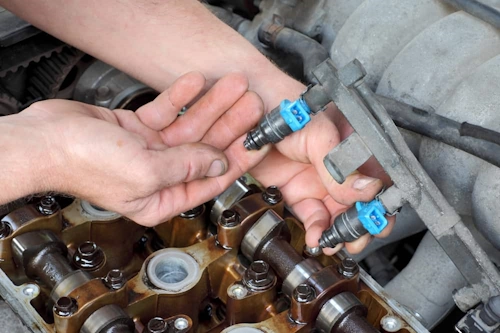
Loss of engine power is one of the most common and frustrating problems for drivers. When acceleration becomes sluggish, the engine hesitates under load, or the car struggles to climb hills, the fuel delivery system — specifically the fuel pump and fuel injectors — is often a primary suspect. This guide explains the typical symptoms, the diagnostic tests you can perform (from basic checks to more advanced measurements), and how to interpret results so you can decide whether to repair or replace components.
Short overview
- Symptoms: hesitation, stalling, poor acceleration, reduced top speed, sputtering under load, black smoke (in some cases), poor fuel economy.
- Likely culprits: weak fuel pump (low pressure/flow), clogged or leaking fuel injectors, electrical faults to the pump or injectors, contaminated fuel, clogged fuel filter.
- What you'll learn: simple checks to rule out other causes, fuel pressure and volume tests, injector balance and spray tests, electrical diagnostics and safety tips.
Who this guide is for
This article is written for car owners, DIY mechanics and professional technicians. Basic mechanical knowledge and access to simple tools is assumed for the basic tests; more advanced diagnostics require a fuel pressure gauge, multimeter, noid light and — ideally — an oscilloscope or injector tester.
Tools and safety equipment
- Fuel pressure gauge (compatible with your vehicle's fuel system)
- Fuel flow meter (optional, for volume tests)
- Multimeter (for voltage, resistance and continuity checks)
- Noid light or injector pulse tester
- Injector cleaning kit or compressed air for bench spray test
- OBD-II scanner (to read error codes and live fuel trims)
- Hand tools (screwdrivers, wrenches), safety glasses, gloves, rags
- Fire extinguisher rated for fuel/chemical fires — always keep nearby
Common symptoms pointing to the fuel pump
- Engine lacks power under load (e.g., climbing hills or accelerating with more throttle)
- Engine sputters at high speeds or when accelerating
- Extended cranking before start or stalling after start (especially when hot)
- Whining sound from the fuel tank area (a high-pitched pump noise)
- Low fuel pressure readings compared to factory spec
Common symptoms pointing to fuel injectors
- Rough idling, misfires, or cylinder-specific misfire codes (P030x)
- Popping or backfiring in the intake/exhaust under acceleration
- Poor fuel economy or black smoke (rich running) if injectors stuck open
- Fuel odor or visible leak at injector seals
- Uneven fuel trim corrections in live OBD data
Basic pre-checks (before you start testing)
Before you test pump pressure or disassemble injectors, run through these quick checks:
- Scan the car with an OBD-II scanner for stored fault codes and pending codes. Codes like P0087 (fuel rail/system pressure too low) or P0190–P0194 (fuel rail pressure sensor) are direct clues.
- Check the fuel level — unusually low fuel can cause the pump to suck air.
- Verify the fuel filter service interval — a heavily clogged filter reduces pressure and flow.
- Listen for the fuel pump prime sound when you switch ignition ON (not cranking). Most pumps run for a second or two to build pressure.
- Confirm ignition and air systems are OK — spark faults or massive intake leaks can mimic fuel delivery issues.
Fuel pump diagnostics — step-by-step
- Listen for pump prime: Turn ignition to ON (do not crank). A healthy pump usually buzzes/whirs for 1–3 seconds. Absence of prime could mean no power to pump, failed pump, or relay/fuse issue.
- Check fuse and relay: Locate the fuel pump fuse and relay. Inspect fuse visually and test relay by swapping with a similar known-good relay (if available).
- Voltage at pump: Back-probe the pump connector (or measure at the harness if accessible) while ignition is ON and during cranking. You should see battery voltage to the pump when priming and while cranking. Low voltage suggests wiring/ground issues or weak battery/connection.
- Static fuel pressure test: Connect an appropriate fuel pressure gauge to the Schrader valve (or test port on the fuel rail). Turn ignition ON to observe key-on pressure and compare to manufacturer spec. Typical modern systems often run 30–60 psi (check your vehicle manual). If pressure is low, proceed to volume test.
- Fuel pump flow (volume) test: Remove the return line or use a flow test rig per manufacturer instructions. Measure liters per minute over a set time and compare to spec. A pump can hold pressure but lack adequate flow under sustained load.
- Pressure drop under load: With engine running or during a high-load simulation, watch the pressure gauge. Excessive pressure drop indicates the pump cannot maintain pressure under demand.
- Noise and vibration: A noisy or excessively vibrating pump often signals wear — consider replacement if other tests fail.
Fuel injector diagnostics — step-by-step
- OBD data and misfire codes: Read live data for fuel trims (short-term and long-term) and monitor per-cylinder misfires. If one cylinder shows a misfire or the fuel trim on that cylinder is dramatically different, suspect its injector.
- Noid light test: Disconnect the injector electrical connector and plug in a noid light. Crank the engine and observe the pulse. A flashing/noid light shows the injector is receiving pulse from ECM. No pulse means wiring or ECM issue.
- Injector resistance test: Measure injector coil resistance with a multimeter. Compare to spec — open circuit or far-out-of-spec resistance indicates a failed injector. Note that some injectors have low resistance and require proper meter range.
- Injector balance (cylinder contribution) test: A professional shop tool can disable injectors one at a time while monitoring engine RPM or using an oscilloscope to measure changes. A healthy injector will cause a consistent RPM drop when disabled; a weak injector causes smaller change.
- Spray pattern and flow test (bench): Remove injectors and test with an injector cleaning/test bench or use pressurized fluid and observe spray pattern into a clear container. Look for a fine, even cone. Dribbling, uneven spray, or strong stream indicates clogging or internal damage.
- Leak test: With system pressurized (or bench rig), check for leaking injectors when the injector is commanded closed. Persistent dribble will cause rich running and may wash oil from cylinder walls.
- Ultrasonic cleaning: Clogged injectors can sometimes be restored using ultrasonic cleaning with proper solvent. After cleaning, re-test spray pattern and flow before reinstalling.
Interpreting common test results
- Low static pressure, no prime, no pump voltage: Wiring/fuse/relay/ECM or dead pump — trace power to pump and repair wiring or replace pump.
- Battery voltage to pump, low pressure: Pump failing or fuel filter clogged — check filter, then pump flow.
- Normal pressure but low flow under load: Pump partially failed — replaces pump or assess fuel delivery lines/filter.
- Noid light flashes but injector resistance open: Electrical pulse arrives but injector coil open — replace injector.
- Injector pulses but poor spray pattern: Injector clogged/dirty or mechanically damaged — cleaning may help; replace if damaged.
- One cylinder richer/leaner than others: Injector issue or compression/ignition problem — correlate with compression test and ignition checks.
Advanced tips and considerations
Fuel quality: Contaminated fuel (water, varnish, debris) often damages pumps and clogs injectors. If fuel contamination is suspected, drain the tank and flush the system.
Fuel pressure regulator: A faulty regulator can mimic pump problems — check vacuum line (if present) for fuel (which indicates diaphragm leak) and test rail pressure for abnormal behavior.
Return vs returnless systems: Understand your vehicle's system: return systems maintain constant flow; returnless systems control pressure at the rail. Procedures differ — always use vehicle-specific service data.
Electrical grounds: Poor ground at the pump or injector harness can create intermittent or weak operation. Clean and secure ground connections.
When to replace vs repair
- Replace the fuel pump if: it cannot meet pressure/flow specs, shows excessive noise, or electrical tests indicate failure.
- Replace injectors if: electrical failure (open coil), leak, irreparable spray pattern damage, or if ultrasonic cleaning does not restore proper function.
- Consider rebuilding the fuel system: If multiple components are degraded (pump, filter, injectors), replacing the pump and cleaning or replacing injectors and filter together often yields the best long-term result.
Quick checklist before calling the shop
- Scan for codes and note any P00xx/P02xx/P04xx/P02xx errors and fuel trim values.
- Listen for pump prime and note sounds from tank area.
- Measure or observe fuel pressure if you have a gauge.
- Perform a noid light test on injectors if you suspect pulses aren’t arriving.
- Document symptoms: when they occur (cold/hot), at which RPMs, and under what load.