

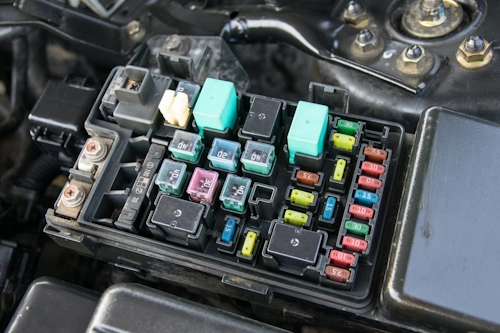
Recognizing Blown Fuse Symptoms
Your vehicle's electrical system relies on fuses as critical safety components that protect circuits from excessive current. When a fuse blows, specific electrical functions will suddenly stop working. The most common indicators include:
- Complete electrical component failure: Non-functional power windows, radio, or interior lights often trace back to a blown fuse
- Lighting issues: Dimming or flickering headlights/taillights suggest possible fuse problems
- Accessory failure: Suddenly inoperative power outlets, windshield wipers, or heater fans
- Burning odors: Distinctive plastic-like smell from the fuse box area
- Dashboard warnings: Illuminated "CHECK FUSE" light or multiple electrical failures occurring simultaneously
These symptoms typically appear without warning since fuses blow instantly when circuits overload. The specific component affected directly correlates with its dedicated fuse location.
Advanced Fuse Diagnosis Techniques
When electrical components fail, these professional methods help pinpoint blown fuses:
| Method | Tools Required | Procedure | Accuracy Indicator |
|---|---|---|---|
| Visual Inspection | None | Remove fuse, examine metal strip against light | Broken/melted filament = blown |
| Test Light | Test light ($5-$15) | Ground clamp, probe both fuse contacts | Light illuminates only on one side |
| Multimeter Continuity | Digital multimeter | Set to ohms/audible, probe both ends | No beep/high resistance = blown |
| Voltage Test | Digital multimeter | Set to 20V DC, test each contact | Voltage only on one side |
| Power Probe | Power Probe III | Connect to power/ground, probe contacts | Red LED/no tone = blown |
Visual inspection remains the simplest approach: remove the suspect fuse and examine the small metal wire inside. A broken, separated, or melted filament confirms a blown fuse. For fuses where damage isn't visible, use these tool-based methods:
- Test light technique: With ignition on, ground the test light's clamp and touch each metal tab on the fuse. Properly functioning fuses illuminate the test light on both contacts
- Multimeter continuity check: Set to audible/ohms mode, touch probes to both fuse ends. A continuous circuit beeps; silence indicates a blown fuse
- Voltage testing: Set multimeter to 20V DC, ground one probe, and test each fuse contact with the other. Voltage on only one side confirms a blown fuse
Fuse Replacement Procedure
Replacing blown fuses requires precision to prevent electrical damage. Follow this professional sequence:
- Vehicle preparation: Turn engine OFF and remove keys from ignition
- Fuse box location: Consult owner's manual for primary (under-hood) and secondary (under-dash) fuse box positions
- Fuse identification: Use diagram on fuse box cover to locate specific component fuses
- Safe removal: Use plastic fuse puller (provided in most boxes) or needle-nose pliers to extract suspect fuse
- Amperage verification: Match replacement fuse's color-coding and amp rating exactly (common ratings: 5A-tan, 10A-red, 15A-blue, 20A-yellow)
- Secure installation: Press replacement firmly into place until fully seated
- Function test: Restart vehicle and verify restored operation
Critical warning: Never substitute with higher-amp fuses, as this invites wire damage and fire risks. If new fuse blows immediately, seek professional diagnosis for underlying circuit issues.
Preventing Future Fuse Failures
Proactive maintenance reduces fuse-related breakdowns significantly:
- Annual electrical inspections: Examine wiring for fraying, corrosion, or rodent damage during routine servicing
- Circuit load management: Avoid plugging multiple high-draw accessories (heaters, compressors) into single outlets
- Battery maintenance: Clean corroded terminals and secure connections to prevent voltage spikes
- Fuse box integrity: Check for water intrusion, loose fuses, or damaged covers
- Correct replacements: Stock spare fuses matching your vehicle's specific amperage requirements
Fuse Type Reference
| Fuse Type | Common Applications | Color Coding | Amperage Range |
|---|---|---|---|
| Blade Fuses (ATC/ATO) | Headlights, audio systems | Various by amp | 5A-40A |
| Mini Blade Fuses | Modern electronics | Various by amp | 2A-30A |
| Maxi Fuses | High-current circuits | Yellow/orange | 20A-100A |
| Mega Fuses | Alternator systems | Yellow/orange | 40A-500A |
When to Consult a Professional
While fuse replacement is DIY-friendly, these scenarios warrant professional diagnostics:
- Recurring fuse failures: Same fuse blowing repeatedly indicates deeper electrical issues
- Burning smells/smoke: Suggest imminent fire hazards from short-circuiting wires
- Multiple system failures: Concurrent electrical malfunctions suggest ECU or main harness problems
- Post-replacement non-function: Component still inoperative after fuse replacement
- Hybrid/electric vehicles: High-voltage systems require specialized training
Modern vehicles contain complex networked systems where fuse issues sometimes serve as symptoms of larger control module or wiring harness problems.
Essential Fuse Kit Recommendations
Build a comprehensive emergency fuse kit containing:
- Assorted blade fuses: Range from 5A to 30A (color-coded)
- Specialty fuses: Include mini, maxi, and micro varieties matching your vehicle
- Fuse puller tool: Plastic extraction tool for safe handling
- Multimeter: Basic digital model for circuit testing
- Test light: Simple circuit tester for quick diagnostics
- Flashlight: LED model for dark fuse box locations
Frequently Asked Questions
Can I temporarily use a higher-amp fuse?
Absolutely not. Using incorrect amperage risks wire damage and electrical fires. If stranded, borrow an identical fuse from non-essential circuits (courtesy lights) temporarily.
Why do fuses blow without apparent reason?
Common causes include aging fuses, vibration-induced fractures, moisture corrosion, or brief power surges from failing components like alternators.
How often should fuses be replaced preventatively?
Fuses don't require scheduled replacement. Inspect during major services and replace only when damaged. Modern blade fuses typically last 10+ years.
Can a blown fuse drain my battery?
Generally no. Blown fuses break circuits, stopping current flow. However, underlying issues causing repeated blowing (parasitic draws) can drain batteries.