

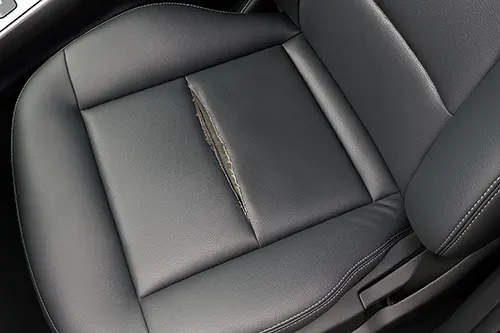
Practical change snapshot brief
On Automotive Upholstery Repair: Leather Conditioning vs Replacement—Cost Analysis on Five Materials, the useful starting point is the trigger: when does it show up, and what makes it disappear?
What matters is discipline: baseline, one change, then proof.
Basic cheap triage set
- Visual: Look for rubbed wiring, loose connectors, cracked hoses, and anything wet near the upholstery area.
- Trigger: Write down the exact condition that reproduces the automotive symptom (cold/warm/load/bumps/refuel).
- Baseline: Correct overdue consumables first so the diagnosis isn't blurred.
- Retest: Use the same route/load so before/after is real.
The first pass on Automotive Upholstery Repair: Leather Conditioning vs Replacement—Cost Analysis on Five Materials should narrow possibilities sharply, not solve everything.
Tools planning steps once
Tooling that keeps Automotive Upholstery Repair: Leather Conditioning vs Replacement—Cost Analysis on Five Materials sane: flashlight, gloves, basic sockets, a pick for connector locks, and photos for routing.
If Automotive Upholstery Repair: Leather Conditioning vs Replacement—Cost Analysis on Five Materials involves fasteners near heat, budget extra time for penetrant and a calm recheck.
Reference consistency cuts rework
If you hesitate about direction during Automotive Upholstery Repair: Leather Conditioning vs Replacement—Cost Analysis on Five Materials, stop and take a reference photo—mirror-thinking causes rework.
Retest step tracks direction
Treat Automotive Upholstery Repair: Leather Conditioning vs Replacement—Cost Analysis on Five Materials like an experiment: label the starting state, adjust one thing, then validate under the same condition.
- Photograph the current setup for Automotive Upholstery Repair: Leather Conditioning vs Replacement—Cost Analysis on Five Materials before moving anything.
- Adjust only one thing so the retest teaches you something.
- Re-run the same trigger condition immediately.
- Record the result and decide the next step based on evidence.
Conversions translation cuts rework
Quick conversion examples for Automotive Upholstery Repair: Leather Conditioning vs Replacement—Cost Analysis on Five Materials: 12 ft-lb (≈16.3 N·m), 25 ft-lb (≈33.9 N·m), 0.020 in (≈0.51 mm), 8 mm (≈0.315 in).
If Automotive Upholstery Repair: Leather Conditioning vs Replacement—Cost Analysis on Five Materials uses torque or gaps, treat unit pairing as part of the procedure.
Load factors guide outcomes
What complicates Automotive Upholstery Repair: Leather Conditioning vs Replacement—Cost Analysis on Five Materials is usually the trigger: heat, vibration, humidity, or load can turn a small weakness into a symptom.
If Automotive Upholstery Repair: Leather Conditioning vs Replacement—Cost Analysis on Five Materials follows refueling, treat vapor/pressure triggers as part of the story.
Common mistakes trigger noise
- No baseline: Without a written baseline for Automotive Upholstery Repair: Leather Conditioning vs Replacement—Cost Analysis on Five Materials, you can’t prove improvement.
- Rushed closeout: Half-seated connectors after Automotive Upholstery Repair: Leather Conditioning vs Replacement—Cost Analysis on Five Materials work create new symptoms.
- No validation: The post-test drive for Automotive Upholstery Repair: Leather Conditioning vs Replacement—Cost Analysis on Five Materials is part of the repair.
- Two variables: On Automotive Upholstery Repair: Leather Conditioning vs Replacement—Cost Analysis on Five Materials, changing two things at once hides the real cause.
For Automotive Upholstery Repair: Leather Conditioning vs Replacement—Cost Analysis on Five Materials, the expensive mistake is replacing what you never proved was bad.
Final habit prevents returns
A habit that helps on Automotive Upholstery Repair: Leather Conditioning vs Replacement—Cost Analysis on Five Materials: do a calm touch-check before closing—connectors seated, routing clear, clips engaged.
Safety baseline for Automotive Upholstery Repair: Leather Conditioning vs Replacement—Cost Analysis on Five Materials: clear floor, good lighting, eye protection, and no rushed steps at the end.
When you finish Automotive Upholstery Repair: Leather Conditioning vs Replacement—Cost Analysis on Five Materials, do a calm tool-count and a final visual sweep.
Decision plan prove results
For Automotive Upholstery Repair: Leather Conditioning vs Replacement—Cost Analysis on Five Materials, confirm the fix by reproducing the original trigger and proving it is gone—then recheck after the drive.
For Automotive Upholstery Repair: Leather Conditioning vs Replacement—Cost Analysis on Five Materials, a repeatable retest is the real finish line.