

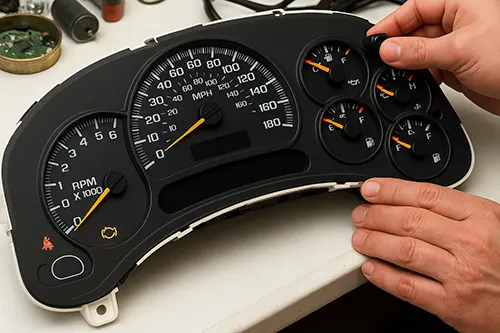
Dead speedometer, fuel gauge stuck, or missing LCD pixels? Instrument cluster failures on domestic vehicles (2003–2013) follow predictable patterns. This repair guide covers stepper motor replacement, LCD ribbon cable reflow, and bulb replacement—without sending the cluster out.
Common cluster failures by platform
| Platform | Common fault | Typical mileage |
|---|---|---|
| GM trucks (2003–2006) | Stepper motors (speedo, fuel, temp) | 150k–200k |
| Dodge RAM (2002–2005) | LCD pixels fade | 120k–180k |
| Ford F-150 (2004–2008) | Backlighting bulbs burn out | Varies |
Stepper motor diagnosis ( example)
- Needle sweeps erratically or stuck at zero
- Tapping cluster makes needle jump temporarily
- Other gauges work normally (rules out power/ground issue)
Cluster removal (general procedure)
- Disconnect battery; remove dash trim around cluster.
- Unbolt cluster (typically 4 screws); disconnect harness connector(s).
- Work on clean bench with ESD protection (static kills electronics).
Stepper motor replacement
- Remove cluster faceplate (clips or screws).
- Identify failed motor (usually visible; gears may be stripped).
- Desolder old motor (4 pins); use solder wick to clean pads.
- Solder new motor; verify pin alignment before applying heat.
- Test cluster before reassembly (apply 12V to bench-test).
LCD pixel repair (ribbon cable reflow)
- Heat LCD ribbon connection with soldering iron tip (wrapped in Kapton tape) at 300°F.
- Apply gentle pressure; pixels often recover as solder reflows.
- Success rate ~60%; if fails, replacement LCD required.
Bulb replacement (backlighting)
- Twist-out or pull-out style bulbs (T5, T10 common)
- LED replacement bulbs available; verify polarity
- Replace all bulbs at once (others will fail soon)
Tools
- Soldering station (temperature-controlled), solder wick, flux
- ESD mat and wrist strap
- Trim removal tools, small screwdrivers
Parts sources
- Stepper motors: X27.168 (GM common); $5–10 each on eBay/Amazon
- Bulbs: $1–3 each
- Replacement LCD: $80–200 (platform-specific)
Bench test procedure
- Apply 12V to cluster power pins (verify pinout via wiring diagram).
- Ground cluster; observe gauge sweep and bulb illumination.
- Some clusters require CAN bus simulation for full function test (advanced).
Cost comparison
- DIY stepper motor repair: $20–40 parts, 2–3 hours
- Cluster rebuild service (mail-in): $150–300
- New cluster from dealer: $400–800 + programming
Repair success rate: stepper motor replacement: 95%+ success; LCD reflow: 60%; bulbs: 100%—most cluster issues are DIY-repairable with basic soldering skills.
Platform-specific stepper motor models
- GM (2003–2006): X27.168 (most common); also X15.168 on some
- Dodge (2002–2005): VID29 series; different pinout
- Ford (2004–2008): varied; verify by cluster part number
Soldering technique (prevent pad lifting)
- Heat iron to 650–700°F (not hotter—damages board).
- Apply flux to pins before soldering.
- Hold iron on pin max 3 seconds—longer lifts traces.
- Use 0.031-inch diameter solder (60/40 rosin-core).
LCD ribbon reflow success factors
- Temperature: 280–320°F optimal; higher risks LCD damage
- Pressure: gentle and even across ribbon width
- Time: 5–10 seconds per section
- Success correlates with how long pixels have been dead (fresh failures reflow better)
Cluster programming requirements
- GM: no programming needed for stepper/bulb repairs
- Ford: some clusters VIN-locked; programming required if replacing entire cluster
- Dodge: mileage stored in cluster; programming needed to prevent odometer discrepancy