

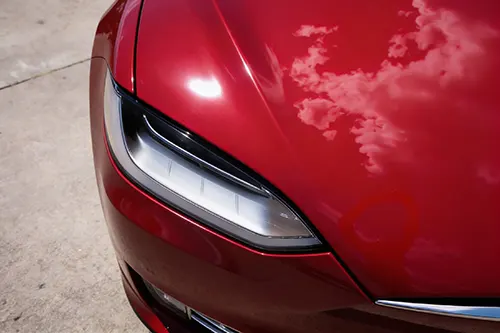
Paint defects require different correction approaches. This decision tree uses visual inspection and simple tests to classify the defect type and direct you to the appropriate repair method—no guessing.
Initial classification (visual inspection)
Decision Point 1: Surface level or subsurface?
- Surface contaminant (on top of clear): feels rough to touch; clay bar test removes it → polish and seal.
- Subsurface (in clear or base): smooth to touch but visible defect → continue to Decision Point 2.
Decision Point 2: Clear coat integrity
- Clear coat intact: shine still present; defect visible but surface glossy → orange peel or base imperfection.
- Clear coat failing: dull, chalky, or peeling → clear failure; refinish required.
Defect catalog with correction paths
Clear coat failure (chalking, peeling)
- Cause: UV damage, improper cure, contaminated surface prep.
- Test: tape test—apply tape, pull; if clear lifts, it's delaminating.
- Fix: wet-sand to base coat, re-clear entire panel. No spot repair works.
Orange peel (excessive texture)
- Cause: improper spray technique, wrong temp/humidity, thick coats.
- Measurement: depth gauge shows >3 mil peak-valley = heavy peel.
- Fix: wet-sand with P1500→P2000→P3000; compound and polish. Risk: sanding through clear on edges.
Fisheye (small craters)
- Cause: silicone contamination on surface before paint.
- Identification: circular depressions with exposed base coat visible at center.
- Fix: wet-sand defect area; re-spray with fisheye eliminator additive in clear. Spot repair possible if blended well.
Solvent pop (pinhole bubbles)
- Cause: trapped solvents from insufficient flash time between coats.
- Test: pinholes cluster in thick-coat areas; surface otherwise smooth.
- Fix: wet-sand flat; reapply thin clear coats with proper flash times.
Dirt nibs (raised particles)
- Cause: airborne debris during application.
- Fix: wet-sand individual nibs with P2000; spot-polish. If excessive, denib entire panel before polish.
Repair method selection (by defect severity)
| Defect | Severity | Method | Skill level |
|---|---|---|---|
| Light orange peel | 1-2 mil | Compound + polish | Beginner |
| Heavy orange peel | 3+ mil | Wet-sand P1500–P3000 + compound | Intermediate |
| Fisheye (few) | <5 spots/panel | Spot wet-sand + re-clear | Intermediate |
| Clear failure | Delamination | Strip to base; re-clear panel | Advanced |
Measurement tools for objective assessment
- Mil gauge (paint thickness): determines remaining clear; <1.5 mil = sand-through risk.
- Gloss meter: quantifies finish quality (>90 GU = showroom; 70–90 = acceptable; <70 = needs work).
- Surface profile gauge: measures orange peel depth.
Common misdiagnoses
- Confusing water spots (surface contamination) with clear failure—clay bar test splits these instantly.
- Assuming orange peel requires refinish—most cases respond to wet-sanding if clear thickness allows.
- Treating fisheye as dirt nibs—fisheye needs re-spray with eliminator additive; sanding alone doesn't prevent recurrence.
Prevention during refinish work
- Pre-paint wipe with panel prep solvent (not just degreaser)—removes silicone.
- Proper flash times between coats per TDS—prevents solvent pop.
- Spray technique: 50% overlap, 6–8 inch gun distance, consistent speed—minimizes orange peel.
- Filtered booth air and tack cloth before clear—eliminates dirt nibs.
Decision tree effectiveness: visual + simple tests correctly classify defect type in 95%+ of cases; directs effort to the appropriate correction method on first attempt.