

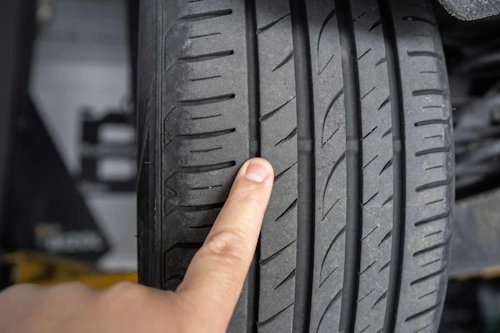
Your tires are the only contact point between your vehicle and the road - and their tread depth is the difference between controlled driving and uncontrolled hydroplaning. As a gearhead who's tested tires from Nürburgring to Death Valley, I've seen how critical tread depth is for safety and performance. This guide delivers battle-tested methods to measure tread depth like a pit crew chief.
Why Tread Depth Matters More Than You Think
Tread grooves aren't just for show - they're engineered water displacement channels. At highway speeds, a bald tire can't evacuate water fast enough, causing hydroplaning where you're essentially waterskiing on pavement. Consider these sobering stats:
- Worn tires (2/32") increase wet stopping distance by 43% vs new tires
- 70% of weather-related crashes occur on wet pavement (NHTSA)
- Tire-related crashes cause approximately 11,000 accidents annually
Pro Measurement Methods: From Pocket Change to Precision Tools
The Penny Test (Classic Quick Check)
How-to: Insert a penny into the tread groove with Lincoln's head upside down. If you can see the top of his head, you're below 2/32".
Pro Tip: Check multiple grooves across the tire - inner, middle, and outer edges. Uneven wear indicates alignment issues.
The Quarter Test (For Wet Weather Warriors)
How-to: Place a quarter into the groove with Washington's head down. If the top of his head is visible, you're below 4/32". This is my personal minimum for rainy climates.
Tread Wear Indicator Bars (Built-In Warning System)
Modern tires feature raised rubber bars (usually 2/32" high) molded perpendicularly across grooves. When these bars become flush with adjacent tread blocks, replacement is mandatory.
Tread Depth Gauge (Surgical Precision)
For exact measurements, use a pocket gauge:
- Press gauge base firmly against the tire in the groove
- Extend the probe until it contacts the groove base
- Read measurement (in 32nds of an inch or mm)
- Repeat in 4 locations per tire
Tread Depth Thresholds: When to Replace
| Tread Depth | Condition | Action Required |
|---|---|---|
| 10/32" - 11/32" | New summer/all-season tires | Ideal performance |
| 6/32" | Winter tires (minimum for snow) | Plan replacement soon |
| 5/32" - 4/32" | Reduced wet performance | Monitor closely, replace before rainy season |
| 3/32" | Significantly reduced safety | Replace immediately |
| 2/32" | Legally worn out (USA) | Illegal to drive |
The Hidden Danger: Uneven Tread Wear Patterns
Irregular wear is your tire's distress signal:
- Center wear: Chronic overinflation
- Edge wear: Underinflation
- Cupping: Worn shocks or unbalanced wheels
- One-side wear: Misalignment
Rotate tires every 5,000 miles to promote even wear and extend tread life.
Winter Tires: The Special Case
Snow tires demand deeper tread - their magic happens through biting edges rather than just water channels. Below 6/32", their snow traction plummets dramatically. My rally experience confirms: 5/32" winter tires are dangerously compromised on ice.
Beyond Depth: The 30-Second Tire Health Check
While measuring tread, inspect for:
- Sidewall cracks or bulges
- Embedded nails or debris
- Uneven wear patterns
- Date codes older than 6 years (even with good tread)
Final Verdict: Checking tread depth isn't optional maintenance - it's survival gear. With these methods and thresholds, you'll know exactly when your tires transition from safety assets to liability. Remember: rubber is cheaper than bodywork, and tread depth is cheaper than hospital bills.