

Suspension tuning is one of the most effective — and misunderstood — areas of car modification. Every car enthusiast dreams about sharper cornering, a lower stance, and a sportier road feel, but the path from stock suspension to a properly tuned setup is full of trade-offs. This article explores how lowering and adjusting your suspension can truly improve handling, and where the risks begin to outweigh the rewards.
Understanding the Purpose of Suspension
The suspension system connects the car’s body to its wheels, balancing comfort, grip, and stability. In factory setups, manufacturers aim for a compromise: the suspension must handle everyday roads, unpredictable bumps, and passenger comfort. Tuning this system means changing that balance — usually prioritizing performance and road feedback over comfort.
In performance terms, suspension tuning affects three key aspects:
- Body control – reducing pitch and roll during acceleration, braking, and cornering.
- Tire contact – maximizing grip by keeping the tire flat on the road.
- Weight transfer – managing how the car’s mass shifts when you steer, brake, or accelerate.
Every modification, from lowering springs to adjustable coilovers, changes these dynamics — sometimes for the better, sometimes not.
Lowering the Car: Aesthetics vs. Function
Lowering a car is the most visible and common type of suspension modification. It’s also the one that causes the most confusion. While it’s true that lowering the center of gravity can reduce body roll and improve responsiveness, excessive lowering can have the opposite effect. The key is moderation and engineering precision.
Benefits of Proper Lowering
A correctly lowered car sits closer to the ground, improving aerodynamics and reducing weight transfer. This can lead to:
- Improved stability in corners.
- Sharper steering response.
- Reduced body roll under hard braking and acceleration.
However, these benefits only appear when the suspension geometry — camber, caster, and toe — is properly adjusted afterward. Simply cutting springs or installing cheap lowering kits without recalibration can cause severe alignment issues, leading to unpredictable handling and uneven tire wear.
Risks and Drawbacks
Lowering the car beyond 30–40 mm from stock height often brings new problems:
- Reduced suspension travel, causing bottoming out on bumps.
- Excessive negative camber, reducing tire life.
- Compromised shock absorber performance.
- Damage to underbody components or exhaust on uneven roads.
In short, lowering should always be approached as part of a full suspension system upgrade — not as an isolated aesthetic modification.
Adjustable Coilovers and Dampers
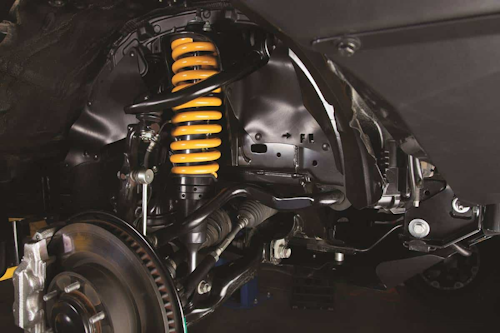
For enthusiasts seeking both comfort and performance, adjustable coilovers are the gold standard. A coilover combines the spring and damper into one unit, allowing you to fine-tune ride height and stiffness. Some even allow for separate rebound and compression adjustments, giving precise control over how the suspension behaves on different surfaces.
Advantages of Coilovers
Properly installed and calibrated coilovers can transform a car’s dynamics:
- Cornering balance: fine-tuned damping helps maintain tire contact.
- Ride height adjustment: lower the car for the track, raise it for street comfort.
- Reduced body roll: more predictable handling through high-speed corners.
However, the benefits depend on correct setup — not just turning the knobs randomly. Professional alignment and corner weighting are crucial steps in coilover tuning. Without them, even premium hardware can make the car feel unstable.
Anti-Roll Bars and Bushings
Suspension tuning isn’t limited to springs and dampers. Anti-roll (or sway) bars connect the left and right sides of the suspension, reducing body roll during cornering. Upgrading to thicker bars can enhance stability — but again, too much stiffness can cause loss of traction on uneven surfaces.
Similarly, replacing factory rubber bushings with polyurethane versions sharpens steering feedback but transmits more vibration into the cabin. A well-tuned setup uses a combination of components to achieve harmony between responsiveness and comfort.
Understanding Geometry: Camber, Caster, and Toe
After any modification, a professional alignment is non-negotiable. Here’s why:
- Camber controls how much the tire tilts inward or outward. Too much negative camber improves grip in corners but destroys tires on straight roads.
- Caster affects steering stability — higher values provide better high-speed control but can make low-speed steering heavier.
- Toe influences turn-in response. Incorrect toe angles lead to wandering steering or twitchy handling.
Adjusting these parameters correctly is the real art of suspension tuning. Many enthusiasts focus on parts, but geometry often matters even more than hardware.
Comfort vs. Control: Finding the Balance
The biggest challenge in suspension tuning is striking a balance between comfort and control. Stiff setups might feel great on smooth asphalt but become unbearable on daily roads. On the other hand, a soft suspension absorbs bumps but dulls the steering feedback and cornering performance.
Modern adjustable systems — such as adaptive dampers — solve this dilemma by allowing on-the-fly tuning. They provide comfort for commuting and stiffness for track days, merging both worlds. While more expensive, they represent the future of suspension technology for performance-oriented drivers.
Common Mistakes in Suspension Tuning
Many DIY enthusiasts make the same mistakes repeatedly:
- Lowering without recalibrating suspension geometry.
- Mixing incompatible components (e.g., lowering springs on stock dampers).
- Ignoring alignment after installation.
- Over-tightening sway bars, reducing wheel independence.
- Skipping professional corner-weight balancing.
Each of these mistakes not only negates the benefits of tuning but can make the car unsafe to drive. Suspension is a dynamic system — every change affects multiple variables, from braking distance to steering behavior.
Real Handling Improvements — What Actually Works
So, what really improves handling without compromising reliability?
- High-quality tires: more impact than any single suspension mod.
- Performance coilovers: when properly installed and aligned.
- Upgraded anti-roll bars: balanced front and rear stiffness.
- Reinforced bushings and mounts: more precise response under load.
- Professional alignment: the cornerstone of all suspension work.
Real performance doesn’t come from going the lowest — it comes from intelligent tuning that matches the driver’s goals, the road conditions, and the car’s inherent design.
Conclusion
Suspension tuning is more science than art, and successful setups require patience, knowledge, and precision. Lowering your car can certainly improve handling, but only when it’s part of a holistic approach that considers damping, geometry, and balance. Go too far, and you’ll end up with a harsh, unpredictable ride. Do it right, and you’ll achieve what every driver dreams of: a car that feels connected to the road and responds as an extension of your own instincts.
Before you start buying parts, define your goal: do you want a track-ready car, a daily driver with sharper feedback, or simply an aesthetic stance? The answer will determine not just how low you go — but how far you’re willing to go in pursuit of true handling perfection.