

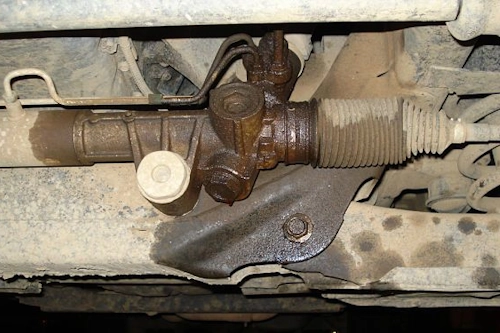
After three decades of wrestling with wrenches and writing about every squeak, rattle, and roll in the automotive world, I've developed a sixth sense for steering issues. Let's cut through the grease and talk about one of the most critical – yet overlooked – systems in your vehicle: the rack and pinion. When this component springs a leak, it's not just a nuisance; it's a safety red flag waving at highway speeds.
The Heart of Your Steering
Your rack and pinion is the translator between your steering wheel and your wheels. Turn the wheel, and this hydraulic marvel converts that motion into directional change. But when hydraulic fluid starts escaping? That's when the conversation between driver and machine breaks down. Unlike minor oil drips, rack leaks compromise control – and that's where we draw the line.
Why Racks Spring Leaks: The Usual Suspects
1. Seal Degradation: The Silent Killer
Heat cycles are murder on rubber. Your rack's internal seals withstand extreme pressure while bathed in hot hydraulic fluid. Over years, they harden and shrink like overcooked bacon. Cold mornings often reveal their betrayal when you spot that telltale puddle under the front axle.
Pro Tip: Park over cardboard overnight to monitor leak patterns. Steering fluid puddles appear closer to the front wheels than engine oil leaks.2. Boot Failure: Inviting Disaster
Those accordion-like bellows aren't just for show. They're dust shields keeping abrasive particles away from the rack rod. Cracked boots? That's an open invitation for road grit to sandblast your precision components. I've seen boots destroyed by off-road adventures, tire rub, and even curious rodents.
3. Impact Damage: The Instant Ruin
One good pothole strike can dent or crack aluminum housings. I witnessed a BMW M3 crack its rack housing after hitting a construction plate at 50 mph. The driver ignored the initial "slight leak" until steering effort doubled by week's end.
4. Corrosion: The Slow Assassin
Road salt eats metal for breakfast. Steel lines develop pinprick holes, while corroded fittings weep fluid like rusty tears. Coastal drivers and snow-belt warriors – this is your nemesis.
5. Pressure Line Failures
High-pressure hoses don't last forever. The constant 1,200-1,800 PSI pulses fatigue hose reinforcement layers. Look for wetness around hose crimps or bulging sections – these are time bombs.
6. Component Fatigue
Over-torqued mounting bolts distort housings. Aluminum racks develop stress cracks near mounting points. I've found hairline fractures using dye penetrant kits that were invisible to the naked eye.
Diagnosis: Become a Fluid Detective
Power steering fluid ranges from blood-red (ATF) to golden (specific PS fluids). Track the source:
- Internal leaks: Fluid inside dust boots indicates seal failure
- End leaks: Wetness at tie-rod ends points to input shaft seals
- Top leaks: Reservoir or pressure line issues
- Whining sounds: Air entering the system through leaks
Perform the "dry steer test": With engine running, turn wheel lock-to-lock while a helper watches for fluid surges. Warning: Don't hold at full lock for more than 3 seconds!
Repair Reality Check
Rebuilding racks requires specialized presses and seal drivers. Unless you're equipped with hydraulic bench vises and seal kits specific to your model, this is a job best left to specialists. Mismatched seals can fail catastrophically at highway speeds.
When replacing, consider upgrading to "remanufactured heavy-duty" units if available for your vehicle. They often feature improved seals and bushings. And always replace hydraulic lines concurrently – old lines fail soon after new rack installation.
Essential Video Guide: 5 Symptoms of a Rack and Pinion Leak - Causes and Fixes
This detailed walkthrough covers rack inspection, leak tracing, and replacement fundamentals – essential viewing before tackling this job.
The Safety Imperative
I'll never forget testing a leaking Ford Explorer that lost all power assist during an evasive maneuver simulation. The delayed reaction could've caused a real collision. Low fluid leads to pump cavitation, which destroys pumps and overheats fluid. Ignoring small leaks risks:
- Sudden loss of power steering at critical moments
- Hydraulic fluid spray onto hot exhaust (fire hazard)
- Contaminated brake components when fluid drips onto lines
Check your fluid monthly – it should be clear, not cloudy or burnt-smelling. Use only manufacturer-specified fluid; wrong viscosity accelerates seal wear. And if your steering ever feels notchy or requires extra effort? Stop driving and investigate immediately.
Remember: Your rack and pinion isn't just another component. It's the lifeline between your intentions and the road. Treat its whispers of trouble with the urgency they deserve.