

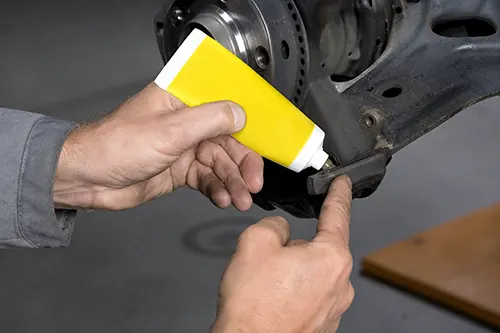
Walk into almost any workshop or spend five minutes on online forums, and you’ll run into the same fierce argument: copper grease vs. silicone grease vs. dedicated brake lubricant. Enthusiasts often swear by one product for absolutely everything. Professionals, meanwhile, keep warning that the wrong lubricant on the wrong component can bring on brake judder, seized pins, or even complete brake failure. This guide cuts through that noise. You’ll see exactly which lubricant belongs where—and which combinations can turn your brake system into a hazard.
The High‑Stakes Reality of Brake Lubrication
Modern disc brakes deal with tremendous heat, extreme pressure, road salt, moisture, and chemicals that can damage rubber. A lubricant that works wonders on a suspension bushing can make caliper piston seals swell. Another grease, perfectly fine on your battery terminals, may melt and run onto brake pads and wipe out stopping power. At first glance, grease is just grease, right? Not here. Understanding the chemistry and application limits of copper grease, silicone grease, and dedicated brake lubricants is not only about saving money—it’s about keeping you and your family safe.
Copper Grease (Copper Anti‑Seize) – The Heavyweight Champion of High‑Temperature Protection
Copper grease is a metal‑based anti‑seize compound containing fine copper particles suspended in a semi‑synthetic or mineral grease. Its main job is straightforward: prevent seizing, galling, and corrosion between metal parts exposed to extreme heat and pressure.
✔ Where Copper Grease Helps (The Right Places)
- Brake pad backing plates (shim contact points): A thin, careful smear between the pad’s backing plate and the caliper piston or caliper body helps dampen vibration and prevents rust‑welding. Never apply to the friction material or the rotor.
- Wheel hub centering rings and mating surfaces: It prevents alloy wheels from seizing to the hub flange, which is a roadside nightmare when you have a flat tire.
- Exhaust system bolts and studs: Copper grease withstands temperatures up to 1100°C (2012°F), so it suits oxygen sensors, exhaust manifold studs, and catalytic converter flanges very well.
- Threads of brake caliper mounting bolts (where specified): On some vehicles, a dab of copper anti‑seize on the bolt threads helps prevent galvanic corrosion. Always check the manufacturer’s recommendation first.
✘ Where Copper Grease Causes Serious Trouble
- On caliper slide pins (guide pins): This is the #1 mistake. Copper grease dries out, gathers dirt, and turns into a sticky paste that makes the caliper stick. Stuck slide pins lead to uneven pad wear, dragging brakes, overheated rotors, and reduced fuel economy. Dedicated silicone‑based brake lubricant or red rubber grease is the correct choice for slide pins.
- Inside rubber boots or on rubber components: Petroleum‑based copper grease attacks natural rubber and many synthetic rubbers used in caliper seals, dust boots, and piston seals. Swollen rubber boots trap moisture and lead to premature caliper failure.
- On ABS tone rings or speed sensors: The copper particles interfere with magnetic wheel speed sensors, triggering false ABS codes and disabling your anti‑lock braking system.
- Anywhere near brake pad friction material: Even a microscopic amount of copper grease on the pad surface or rotor contaminates the friction, which can lead to brake judder, reduced stopping power, and dangerous noise.
Silicone Grease – The Rubber‑Friendly Protector
Silicone grease, often called dielectric grease or silicone paste, is a non‑petroleum, water‑repellent lubricant. It stays stable across a wide temperature range (-40°C to 200°C / -40°F to 392°F) and is chemically inert with most rubber and plastic components. What is important, though, is the trade‑off: it has very poor metal‑to‑metal high‑pressure resistance.
✔ Where Silicone Grease Excels
- Rubber caliper slide pin boots and piston dust boots: Silicone grease keeps rubber supple, helps prevent cracking, and provides a water‑tight seal without swelling the rubber. Apply a thin film inside the boots before installing slide pins.
- Electrical connectors in the engine bay and ABS connectors: As a dielectric grease, it helps prevent moisture ingress, corrosion, and voltage leakage without shorting pins.
- Parking brake cable ends and linkages: It repels water and won’t wash away, but only on low‑load, low‑speed mechanisms.
- O‑rings in brake hydraulic systems (assembly lube): Silicone grease is compatible with EPDM rubber used in master cylinder rebuild kits and caliper piston seals.
✘ Where Silicone Grease Fails or Causes Damage
- On metal‑to‑metal sliding surfaces (e.g., pad backing plates to caliper): Silicone grease lacks high‑pressure film strength. Under braking loads, it gets squeezed out, leaving metal parts unprotected. Then come squealing, uneven wear, and, sooner or later, corrosion.
- On caliper slide pins that experience high mechanical load: Many professional brake specialists have reported that silicone grease alone leads to pin galling in heavy‑duty applications. Slide pins require a high‑temperature, high‑pressure, mineral‑resistant grease (synthetic brake lubricant with solid lubricants like PTFE or molybdenum disulfide).
- On wheel lug nuts or wheel hub flanges: Silicone grease can cause over‑torquing because of its extreme slipperiness, and it attracts dirt that leads to false torque readings. Copper grease is preferable for hub mating surfaces.
- Inside brake fluid systems: Never use silicone grease inside the hydraulic circuit (except as a very thin assembly lube on seals). It can contaminate brake fluid and cause rubber swelling or seal failure.
Dedicated Brake Lubricant (Synthetic / Ceramic / PTFE) – The Professional's Choice
Modern dedicated brake lubricants are formulated specifically for the unusual demands of disc and drum brake systems. They are typically synthetic (PAO or ester‑based) with solid lubricants like PTFE (Teflon), molybdenum disulfide (MoS2), or ceramic micro‑particles. They withstand temperatures from -50°C to over 1400°C (intermittent), repel water, and remain compatible with rubber, plastic, and metals. In other words, this is the stuff meant for the job.
✔ Where Brake Lubricant Should Always Be Used
- Caliper slide pins (guide pins) – the most critical application: Use a high‑quality synthetic brake lubricant designed specifically for slide pins. It stays where it should, resists washout, and helps prevent sticking even under extreme braking heat.
- Contact points between brake pad shims and caliper housing: A small amount on the outer ends of pads where they sit in the caliper bracket helps prevent noise and rust.
- Back of brake pads (between pad and caliper piston / caliper body): Synthetic brake lubricant dampens the high‑frequency vibrations that cause brake squeal. Unlike copper grease, it won’t dry out or run onto the rotor.
- Drum brake backing plate contact points (where shoes touch the plate).
- Parking brake lever pivot points on rear calipers.
✘ Where Brake Lubricant is Not Recommended (or must be avoided)
- On brake pad friction material or rotor surfaces – obvious, but worth repeating.
- Inside ABS sensor ports or on magnetic encoder rings – some synthetic lubricants contain metal particles that can confuse sensors.
- As a general anti‑seize on exhaust bolts (most brake lubes can’t handle the extreme heat of exhaust manifolds). Copper grease is better there.
- As a dielectric grease for electrical connectors – brake lubricant may conduct electricity or degrade plastic connectors.
Quick Reference Table: Which Grease for Which Job?
| Component / Application | Copper Grease | Silicone Grease | Dedicated Brake Lube (Synthetic) |
|---|---|---|---|
| Brake caliper slide pins | ❌ NO – dries, causes sticking | ⚠️ Only for boots, not for pins | ✅ YES – best choice |
| Pad backing plate / shims | ✅ Acceptable (thin coat) | ❌ No – lacks pressure resistance | ✅ YES – ideal |
| Rubber boots & seals | ❌ NO – attacks rubber | ✅ YES – rubber‑safe | ✅ YES – most modern formulas are rubber‑safe |
| Wheel hub mating surface | ✅ YES – prevents seizure | ⚠️ OK but attracts dirt | ⚠️ OK but less common |
| Exhaust studs / O2 sensors | ✅ YES – high heat | ❌ NO – temperature limit | ❌ No – not designed for exhaust |
| Electrical connectors (ABS, lights) | ❌ NO – conductive | ✅ YES – dielectric grease | ❌ No – may not be dielectric |
| Brake hydraulic o‑rings (assembly) | ❌ NO – petroleum attacks rubber | ✅ YES – safe for EPDM | ✅ YES – if labelled for hydraulic seals |
Real‑World Horror Stories: What Happens When You Use the Wrong Grease
Case 1 – Copper grease on slide pins: A DIYer applied copper anti‑seize generously to the caliper slide pins of his daily driver. After six months, the grease had hardened, mixed with road grit, and turned into a cement‑like paste. The caliper seized. The rotor overheated, and the car pulled violently to one side during braking. Repair: new caliper, pads, and rotor – over $500.
Case 2 – Silicone grease on pad backing plates: Another enthusiast used silicone dielectric grease on the back of brake pads to stop squeal. After two weeks of highway driving, the grease had melted and migrated onto the pad friction surface. The result was dangerously reduced stopping power from pad contamination. The entire brake job had to be redone with proper brake lubricant.
Case 3 – No lubricant on hub mating surface: Not exactly a grease choice error, but still a very common mistake—using nothing. The alloy wheel corroded to the steel hub so badly that a roadside tire change became impossible. The driver had to be towed to a shop, where a mechanic used a sledgehammer to break the wheel free. A thin layer of copper grease would have prevented this nightmare.
Step‑by‑Step: Proper Brake Lubrication Without Compromise
- Clean everything first: Use brake cleaner and a wire brush to remove old grease, rust, and debris from slide pin bores, pad ears, and caliper brackets.
- Apply dedicated synthetic brake lubricant to slide pins: Use a thin, even layer on the entire pin. Do not overfill the boot—excess grease can trap the pin and cause hydraulic lock.
- Apply silicone grease (or brake lube) to rubber boots: Smear a small amount inside each boot to lubricate the pin entry and protect rubber from drying.
- Apply copper grease OR brake lubricant to pad backing plates and shims: Use either, but never both at the same time. A light film is enough—you should still see metal through the grease.
- Apply a tiny dab of copper grease to wheel hub centering ring: Avoid getting any on the wheel bolts or lug nut threads unless specified by the vehicle manufacturer (many now advise dry threads).
- Wipe away any excess lubricant from all surfaces. The only thing between your pads and rotors should be clean air and friction material.
The Bottom Line – Keep Three Tubes in Your Workshop
No single lubricant does it all. If you want to do brake jobs correctly and safely, you need at least two, and ideally three products. Annoying? Maybe a little. Necessary? Absolutely.
- Small tube of copper anti‑seize – for hub mating surfaces, exhaust work, and backing plates (if you prefer it).
- Tube of silicone dielectric grease – for rubber boots, electrical connectors, and O‑rings.
- High‑quality synthetic brake lubricant (ceramic or PTFE based) – for slide pins, pad ears, and any metal‑to‑metal sliding contact under extreme pressure.
Remember: when in doubt, read the product label. A grease labelled specifically for „brake caliper slide pins“ or „disc brake assembly“ is always safer than guessing. Your brakes are your vehicle’s most important safety system—don’t cut corners with the wrong lubricant.
Final Pro Tip – The „Clean Finger“ Rule
After applying any brake lubricant, run a clean finger over the component. If you pick up visible globs, you’ve used too much. Excess grease attracts dirt, migrates to friction surfaces, and creates problems. A microscopic film is all that’s needed. Less is almost always more when it comes to brake grease.
Stay safe, stop reliably, and choose your lubricants like a pro—based on chemistry, not myth.