

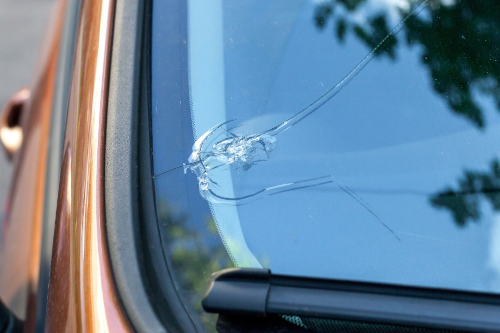
Stone chip today, full crack tomorrow? Knowing when a windshield can be repaired and when it must be replaced saves money—and keeps the car safe. This practical guide explains common crack types, a simple decision checklist, safety risks if you delay, and what repair/replacement really costs.
What kind of damage is it?
- Chip (pit): small surface divot without spreading lines.
- Bullseye: circular cone with a dark center.
- Star break: impact point with several short radiating cracks.
- Combination: bullseye with small radiating legs.
- Short crack: up to ~6–8 in (15–20 cm).
- Long crack: longer than ~8 in or running edge‑to‑edge.
- Edge crack: starts within ~2 in (5 cm) of the edge—structurally risky.
Repair or replace? Quick decision checklist
- Size: chips and short cracks usually repairable; long/edge cracks → replace.
- Location: in the driver’s direct line of sight → replace (distortion after repair).
- Depth: damage into inner laminate or multiple layers → replace.
- Count: many chips or multiple intersecting cracks → replace.
- Contamination: dirty/wet for weeks? Repair success drops → consider replace.
The safety (and legal) cost of waiting
- Structure: the windshield helps roof strength and airbag deployment; cracks reduce its support.
- Propagation: heat, potholes, and car‑wash pressure quickly turn a chip into a long crack.
- Inspection: many regions fail inspection for cracks in view or near edges.
- Total cost: a $80 repair today vs $500–$1,200+ replacement later—plus ADAS calibration.
How professional repair works (resin injection)
- Clean and dry the damage; stabilize with a bridge injector.
- Vacuum → pressure cycles to drive resin into micro‑cracks.
- UV‑cure; fill the pit, blade off excess, and polish.
- Goal: restore strength and stop spread; minor blemish may remain.
When replacement is the safer call
- Crack crosses the driver’s view, is long/edge‑origin, or reaches the laminate.
- Multiple chips/legs, old contaminated damage, or previous failed repair.
- ADAS present? Expect camera/radar calibration after glass replacement.
Costs you can expect (rough ranges)
- Chip/short‑crack repair: ~US$60–150 per spot; second point often discounted.
- Replacement: ~US$300–600 basic; US$700–1,200+ with rain sensors, heating, acoustic/solar layers, ADAS calibration.
- Insurance: many policies waive deductible for repair; replacement may have a deductible.
Do this right now (if you just got a chip)
- Cover with clear tape to keep dirt/moisture out.
- Avoid extremes (car wash, slamming doors) until repaired.
- Book a repair within days for best optical and structural outcome.
Replacement checklist
- OEM vs high‑quality aftermarket glass; correct sensors and brackets.
- New moldings/clips if required; verify curing time before driving.
- Schedule ADAS calibration where applicable (static/dynamic per OEM).
Bottom line
Small damage? Repair early and you’ll likely avoid a costly replacement. Long, edge, or line‑of‑sight cracks—and anything involving the laminate—call for new glass and proper ADAS calibration.