

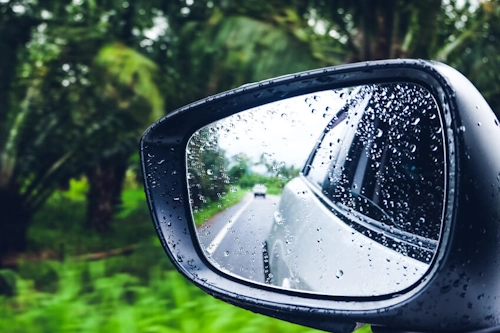
Why Proper Mirror Adjustment Matters
Your vehicle's mirrors serve as critical safety tools, providing up to 90% of your situational awareness while driving. Despite advanced technologies like blind-spot monitoring systems, studies show 600,000 lane-change accidents occur annually due to improper mirror use. This guide reveals professional techniques to optimize your mirror setup and create a seamless 360° view.
Step-by-Step Mirror Adjustment Protocol
1. Prepare Your Driving Position
- Adjust seat height for clear forward visibility
- Position steering wheel for comfortable reach (wrists should rest on wheel rim)
- Ensure pedals are easily accessible without stretching
2. Rearview Mirror Configuration
Center the mirror to frame your entire rear window without head movement. For optimal night driving:
- Engage anti-glare tab (present in 78% of modern vehicles)
- Tall drivers (6ft+) should flip the mirror upside down for better sightlines
3. Side Mirror Precision Setup
Employ the Blindzone Glare Elimination (BGE) method:
- Driver's Side: Lean left until head touches window. Adjust mirror until rear fender barely appears
- Passenger Side: Lean right over center console. Position mirror to show minimal car body
Properly adjusted side mirrors should display adjacent lanes, not your own vehicle. Test by watching vehicles transition from rearview to side mirrors without disappearing.
Advanced Techniques for Different Scenarios
Night Driving Adjustments
- Dim rearview mirror using built-in lever
- Clean mirrors monthly to reduce glare from headlights
- Angle side mirrors slightly downward in stop-and-go traffic
Trailer Towing Configuration
- Extend side mirrors outward by 15-20°
- Install convex auxiliary mirrors for trailer wheel visibility
- Re-calibrate every 100 miles during long hauls
Common Mistakes & Professional Solutions
| Error | Risk | Fix |
|---|---|---|
| Seeing >2" of own car | 35% larger blind spots | Re-adjust using BGE method |
| Mirror overlap with rearview | Reduced peripheral coverage | Create sequential viewing zones |
| Static mirror positions | Poor adaptation to load/terrain | Develop adjustment muscle memory |
Expert Recommendations
"The SAE-recommended mirror positioning eliminates traditional blind spots when properly executed. It requires discipline to overcome the psychological need to see your vehicle's flanks, but the safety payoff is immense." - Tony Quiroga, Car and Driver Editor-in-Chief
Maintenance Checklist
- Clean mirrors weekly with 70% isopropyl alcohol
- Check mirror stability monthly (prevent drooping)
- Re-calibrate after service visits or car washes
- Replace aged mirror glass (every 5-7 years)
When Technology Complements Technique
While 92% of new cars feature blind-spot detection, these systems should augment proper mirror use, not replace it. Consider adding:
- Wide-angle mirror inserts (not circular blind-spot mirrors)
- Electrochromic auto-dimming mirrors
- Heated mirror elements for winter clarity
Final Verification Test
- Find empty parking lot with lane markers
- Drive straight at 10 MPH
- Have assistant walk around vehicle perimeter
- Verify continuous visual tracking through mirror sequence
By mastering these professional techniques, you'll reduce lane-change accidents by up to 63% and gain confidence in all driving conditions. Remember: mirrors form your visual safety net - keep them taut and properly aligned.