

Introduction
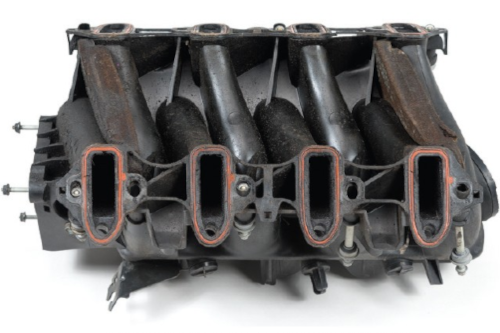
This guide covers the upper intake manifold repair on the Chevrolet Silverado 1500 (2014–2018) 5.3L V8 (Gen V L83), a popular GM full-size truck configuration. Focusing on a specific model makes the procedure clearer and more actionable, including hose routing, harness connectors, and reassembly specifics typical for this platform.
We will walk through diagnostics (vacuum and unmetered air leaks), preparation, safe removal, gasket replacement, reassembly patterns, and post-repair checks. Where exact torque values differ by VIN/engine RPO, always verify in the OEM manual; use the tightening sequence provided here to avoid warping.
Vehicle Coverage
- Model: Chevrolet Silverado 1500
- Years: 2014–2018
- Engine: 5.3L V8 L83 (Gen V)
- Platform: K2XX
For parts diagrams and hose routing, see: 7zap Silverado catalog.
Common Symptoms Requiring Service
- Rough/unstable idle, whistle/hissing under the hood
- Lean fuel trim codes (e.g., P0171/P0174)
- EVAP purge or PCV related DTCs after recent service
- Fuel smell or visible, flattened manifold gaskets
- Stumble after cold start; improved with brake cleaner test near the intake seams
Tools & Equipment
- Socket set (metric), low-profile ratchet, extensions
- Torque wrench capable of low values (inch‑pounds) and mid values (ft‑lb)
- Pick tool for connectors, fuel line disconnect tools (if applicable)
- Plastic scraper, lint‑free rags, throttle body/intake cleaner
- Smoke machine or propane enrichment tool for leak checks (optional)
- OBD‑II scan tool for trims/DTCs and idle relearn
Parts (Typical)
- Upper intake manifold gasket set (new, multi‑port seals)
- Throttle body gasket (if removed)
- PCV/EVAP hose O‑rings as needed
- Dielectric grease for electrical connectors (optional)
Use 7zap to select VIN‑matched gaskets and seals for L83: catalog.
Pre‑Checks and Preparation
- Record fuel trims (LTFT/STFT) at idle and 2500 rpm; note any lean conditions.
- Battery negative terminal: disconnect.
- Remove engine cover; photograph hose and harness routing for reference.
- Label EVAP purge line, brake booster hose, PCV connections, MAP, and throttle body connector.
Removal – Silverado 1500 (L83)
- Unclip air intake duct; disconnect MAF and breather hoses; move duct aside.
- Disconnect EVAP purge solenoid line at the intake; cap to prevent debris entry.
- Unplug MAP sensor, throttle body connector, and any loom clips on the manifold.
- Release brake booster vacuum hose quick‑connect at the manifold nipple.
- Remove the upper intake manifold bolts in a reverse‑crisscross sequence starting from the outside working inward. Keep bolts organized.
- Lift the upper manifold straight up; avoid scraping injector wiring. Cover intake ports with clean rags immediately.
Inspection & Cleaning
- Remove old gaskets; inspect for flattening or cracks. Clean the groove; do not gouge the plastic manifold.
- Wipe mating surfaces with lint‑free rags; avoid solvent pooling in ports.
- Check PCV passages and EVAP purge nipple for blockage; clear gently if needed.
Installation – Gaskets & Manifold
- Seat new upper intake gaskets fully in the manifold grooves; ensure uniform height around the perimeter.
- Lower the manifold vertically, aligning dowels. Confirm no harness is trapped.
- Install bolts finger‑tight in a crisscross pattern center‑out.
- Tightening sequence: center → intermediate → outer rows in a cross pattern. Use staged passes (light → final). Refer to the OEM spec for your VIN; the sequence prevents distortion.
- Reconnect brake booster hose, EVAP purge line, MAP sensor, throttle body connector, and loom clips.
- Reinstall the intake duct; connect MAF and breathers.
Post‑Repair Checks
- Reconnect the battery; key‑on, perform throttle body/idle relearn if prompted.
- Start engine; listen for whistle/hiss. Spray around the manifold perimeter with carb cleaner or use a smoke machine; trims should stay stable.
- Clear DTCs; road‑test. Verify LTFT within normal range (±5–8% typical) at idle and cruise.
Troubleshooting
- Whistle after repair: recheck gasket seating and EVAP/booster connections; ensure bolts were tightened in sequence.
- High positive trims: smoke test for remaining unmetered air; inspect PCV hoses and throttle body gasket.
- EVAP codes: verify quick‑connect O‑rings on the purge line; inspect the purge solenoid.
References
- 7zap Silverado catalog: diagrams & part numbers
- GM Service Information (SI) for VIN‑specific torque specs and sequences
Conclusion
By focusing on the Silverado 1500 (2014–2018) 5.3L L83, this guide emphasizes the exact routing, connectors, and reassembly patterns you will encounter. Using new gaskets, following the cross‑pattern sequence, and validating trims with a quick smoke or spray test will eliminate most repeat leaks and drivability complaints.