

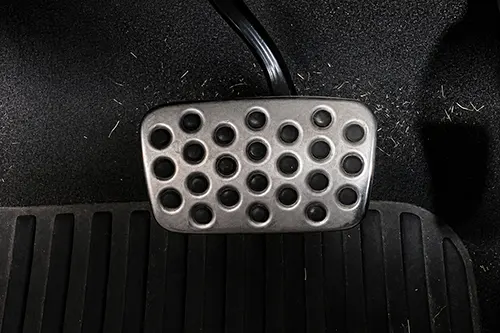
You’re sitting at a long red light, foot planted on the brake pedal. A few seconds pass, and then you feel it: the pedal starts to sink ever so slightly beneath your foot. Not a sudden drop, just a slow, unsettling creep toward the floor. Your heart rate jumps a bit. Is the braking system about to fail? Do you need to pull over right now? Or is this one of those things that feels worse than it is?
This phenomenon—commonly called “pedal sink” or “brake pedal drop”—spooks a lot of drivers. And, at first glance, for good reason. But the truth is a little more nuanced: it can come from two completely different issues, one harmless and one dangerous. The vacuum power brake booster can cause a normal, minor pedal drop while the engine is running. A failing master cylinder with internal leakage (bypass), on the other hand, is a real safety hazard and needs immediate attention.
As a lifelong automotive enthusiast, I’ve diagnosed this exact complaint hundreds of times. The good news? You can usually tell which one you’re dealing with right in your driveway using a few simple tests—no special tools needed. This guide walks through the anatomy of each system, the classic symptoms, and a diagnostic sequence that makes it pretty hard to get lost, so you can figure out whether you need a quick reality check or an urgent repair.
Understanding the Two Culprits: Booster vs. Master Cylinder
Before getting into the tests, it helps to understand what each component does—and how each one can create a sinking pedal.
1. The Vacuum Brake Booster (Harmless Sink)
The brake booster is a large, round black canister mounted between the firewall and the master cylinder. Its job is to multiply the force you apply to the pedal using engine vacuum (or a vacuum pump on diesels). When you hold the pedal steady at a stop, the booster’s internal diaphragm and vacuum valve can settle a little, letting the pedal move downward a centimeter or two. It is worth noting that this is especially common in older vehicles or after a hard stop.
Key point: This kind of sink is slow, shallow, and stops after a small movement. Once it reaches its “natural” position, the pedal feels firm again. No fluid leak. No loss of braking ability.
2. Master Cylinder Bypass (Dangerous Sink)
The master cylinder is the hydraulic heart of the brake system. Inside it are two pistons with rubber cup seals that push brake fluid to the front and rear brakes. Over time, those seals can wear, or the cylinder bore can corrode. When you hold pressure on the pedal, fluid slips past the worn seals—this is called internal bypass or cup seal leakage. The pedal will continue to sink slowly toward the floor without stopping. Eventually, brake pressure may be lost entirely, especially if both circuits fail.
Key point: This sink is progressive, continuous, and often ends with the pedal near the floor. That’s a critical failure, plain and simple, and it requires immediate master cylinder replacement.
Quick Reference: Booster Behavior vs. Master Cylinder Bypass
| Characteristic | Normal Booster Behavior | Master Cylinder Bypass (Failure) |
|---|---|---|
| Pedal movement amount | ½ to 1 inch (10-25mm) slow drop | Continues to sink all the way to floor |
| Does it stop sinking? | Yes, after a short distance, pedal becomes firm | No, it slowly keeps going |
| Pump pedal effect | May improve slightly | First pump higher, then same sink |
| Engine on/off difference | Sink only with engine running | Sinks with engine on or off (but worse on) |
| External fluid leak | None | Sometimes none – internal only |
| Danger level | Low (normal characteristic) | High – replace immediately |
Step-by-Step Diagnosis: Three Tests to Pinpoint the Problem
You don’t need a mechanic to begin. Do these tests in a safe, level area, first with the engine off and then with it running. Always use the parking brake when parked. Sounds basic, sure, but basic matters here.
Test 1: The “Engine Off – Engine On” Comparison
- With the engine off, press the brake pedal firmly and hold it for 30 seconds. Does it sink? If it does, that points to master cylinder bypass, even without vacuum assist.
- Start the engine while keeping your foot on the pedal. Normal behavior: the pedal will drop slightly (about ¼ inch) as vacuum builds. That’s just the booster pulling the diaphragm. If it then continues to sink slowly after that initial drop, that’s the master cylinder.
- Pro tip: if the pedal only sinks with the engine running, and the movement is less than an inch and then stops, you’re almost certainly fine.
Test 2: The “Pump and Hold” Method
With the engine running, rapidly pump the brake pedal 3-4 times and then hold steady pressure. Watch what the pedal does next.
- Normal booster: after pumping, the pedal will feel high and firm, then it may drop a small amount as you hold it—but it stops.
- Master cylinder bypass: the first pump may feel higher, but the pedal then slowly sinks all the way down despite firm pressure. Important: that confirms internal leakage.
Test 3: The “Stall Test” (Check Booster Integrity)
This test checks that the booster itself is not leaking vacuum internally, because that can sometimes look a bit like pedal drop.
- With the engine off, press and release the pedal several times to deplete residual vacuum.
- Hold the pedal down with light pressure, then start the engine. The pedal should drop slightly. That part is normal. If it doesn’t drop at all, the booster may have a vacuum supply problem.
- If the pedal slowly sinks without stopping after starting, that still points to the master cylinder, not the booster.
What About External Brake Fluid Leaks?
A sinking pedal can also come from an external fluid leak—at a caliper, wheel cylinder, brake line, or hose. Usually, though, there are other clues: a low brake fluid reservoir, visible wet spots under the car, a spongy pedal that feels soft right from the top, and the need to pump the pedal to get any braking. If you see fluid on the ground or inside the wheels, fix that leak first. But an internal master cylinder leak leaves no external trace; the fluid simply moves past the seals inside the bore.
Real-World Example: Two Different Customers
Case A (Booster behavior – no repair needed): 2014 Ford F-150. The owner complained that at stoplights the pedal crept down about an inch, then held. No fluid loss. The pedal never got anywhere near the floor. I did the pump-and-hold test: after pumping, it stayed high, then dropped only slightly and stopped. No action advised—it was a normal booster characteristic for that model. The owner, needless to say, was relieved.
Case B (Master cylinder bypass – urgent replacement): 2006 Honda Accord. The pedal slowly sank all the way to the floor at every stop. The owner had to pump the brakes before moving. No external leaks. Pump-and-hold test: the first pump gave some height, but in 10 seconds the pedal was on the floor. I replaced the master cylinder, and the problem was solved completely. The old master’s primary cup seals were visibly worn.
What to Do If You Confirm Master Cylinder Bypass
Don’t ignore it. Internal leakage only gets worse. Eventually, you may lose one brake circuit (front or rear), and then the other—which can lead to complete brake failure. Replace the master cylinder immediately. It’s a DIY-friendly job for an intermediate enthusiast, but bench bleeding the new unit before installation is required. If you’re not confident, have a professional handle it. What is important is that you also flush the entire brake system with fresh DOT 3 or DOT 4 fluid (as specified), because contaminated fluid often leads to seal deterioration.
How to Prevent Master Cylinder Failure
- Change brake fluid every 2-3 years. Brake fluid absorbs moisture, and that corrodes the cylinder bore and damages seals.
- Avoid pressing the pedal to the floor when bleeding brakes—that can push old, corroded seal lips over unworn bore areas.
- If your car has ABS, follow proper bleeding procedures to avoid introducing air, but fluid changes still matter.
When to Suspect Other Causes (Rare)
In some vehicles, a failing brake hose can expand under pressure and feel like a sinking pedal. But that usually feels spongy from the start, not like a slow creep. Also, a faulty ABS hydraulic modulator—especially on older Bosch systems—can occasionally mimic internal bypass, though that’s far less common. The three tests above still point you in the right direction: if pumping the pedal changes the feel drastically, suspect the master cylinder.
Summing up: Stay Calm, Diagnose Smartly
A sinking brake pedal at a stoplight is alarming, but it is not always a disaster. Once you understand the difference between normal vacuum booster “settle” and dangerous master cylinder internal bypass, you can avoid unnecessary panic—or catch a critical failure before it causes a crash. Do the engine-off/on test and the pump-and-hold test. If the pedal sinks and keeps sinking, replace the master cylinder without delay. If it drops a little and then holds firm, enjoy the rest of the drive and keep up with brake fluid maintenance.
Final safety reminder: Your brakes are the most important safety system on your car. If you have any doubt at all, have a qualified mechanic inspect the system. Diagnosis is cheap compared to the consequences of brake failure.
Drive smart, stay safe, and never ignore a pedal that tells you something’s wrong.