

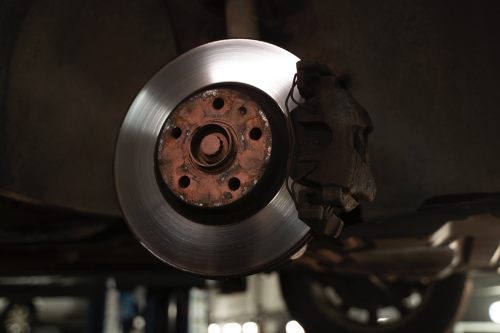
Your choice of discs and pads shapes bite, noise, dust, and longevity. Here’s how to pick for city use, highway heat, or spirited driving—minus the marketing myths.
Materials and behavior
- OE/organic: quiet, low dust, medium initial bite—great for city commutes.
- Semi‑metallic: higher working temps, stronger bite; may squeal and dust more.
- Ceramic: stable and clean wheels; colder initial bite can be softer.
- Drilled/slottted discs: better gas/water evacuation but often more noise and pad wear.
Match to the job
- City: OE/ceramic for comfort and clean wheels.
- Highway/heat: semi‑metallic with vented/slotted discs.
- Spirited: higher‑mu compounds—mind warm‑up needs and rotor temps.
Brand practice (generalized)
- Discs: ATE/Brembo/Textar—consistent geometry and balance.
- Pads: ATE/TRW/Nisshinbo—predictable friction; ceramics in reputable lines.
Selection checklist
- Your driving style and vehicle mass first.
- Thermal capacity and friction coefficient per TDS.
- OE sizes, ventilation, wear sensors as applicable.
Common mistakes
- “Track” pads for city use → squeal and poor cold performance.
- Cheap no‑name sets → run‑out, judder, early wear.
- Mix‑and‑match rotor/pad chemistry without understanding compatibility.
Conclusion
There’s no one “best.” City driving favors comfort and cleanliness; performance use needs heat stability and consistent friction. Brand matters, but correct spec for your use matters more.