

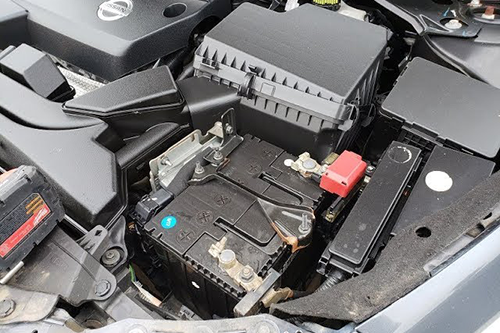
Dead battery every few days on your Nissan Altima (2013–2018)? Before buying a new one, verify it's actually worn out—and not a parasitic draw. This guide covers battery testing, AGM vs flooded choice, smart charging systems, and a quick current draw check.
Owner's case
Nina's 2015 Altima 2.5S wouldn't start after two days parked at the airport. Jump-started fine; she assumed bad battery. Real issue: aftermarket alarm drawing 120 mA continuously.
Test the battery first
- Load test: most auto parts stores do this free; 12.4+ V resting, holds >9.6 V under load = probably OK.
- Cranking voltage: should stay above ~10 V during a 5-second crank (measure at the battery).
- Age: 4–6 years is typical life; if it's within that and tests OK, look for draw.
Parasitic draw quick check
- Let the car sleep 20–30 minutes after locking (modules need to power down).
- Use a clamp meter on the negative cable: <50 mA is normal; >80 mA suggests a problem.
- If high, pull fuses one by one until current drops—that circuit has the draw.
AGM vs flooded (which for ?)
- 2013–2018 Altima: factory battery is flooded (standard wet cell); no stop-start on these years.
- AGM upgrade: longer life, better cold cranking, but costs ~30–50% more. Worth it if you live in extreme climates.
- Group size: verify 35 or 24F for your Altima year (check the label on the old battery).
Installation & smart charging notes
- Disconnect negative first, then positive; remove hold-down bracket.
- Clean terminals with a wire brush; inspect cables for corrosion—replace if the insulation is cracked.
- Install new battery; torque terminals snug (don't strip the soft lead posts).
- Smart charging: the Altima ECU monitors battery condition; no special reset needed, but drive for 20 minutes to let it relearn.
Nina's outcome
Battery tested OK; draw was 120 mA from the alarm. Disconnected the alarm module; draw dropped to 35 mA. She replaced the alarm with a quality unit that has proper sleep mode. No new battery needed—saved $150.
Costs
- Flooded battery (Group 35): ~$100–180
- AGM (Group 35): ~$180–280
- Shop install: often free with battery purchase
Tools
- 10 mm wrench/socket for terminals, clamp meter for draw test
- Wire brush, terminal protector spray
For battery specs and charging system diagrams
Check the Nissan 7zap catalog: nissan.7zap.com.
Common mistakes
- Installing a battery without testing draw—new battery dies in a week.
- Mixing up terminal sizes (some batteries have side and top posts)—poor connection.
- Skipping the cable inspection—corrosion inside the cable end kills batteries fast.
Result: Nina's Altima starts reliably; she learned to test before replacing—and found the real fault in 10 minutes.