

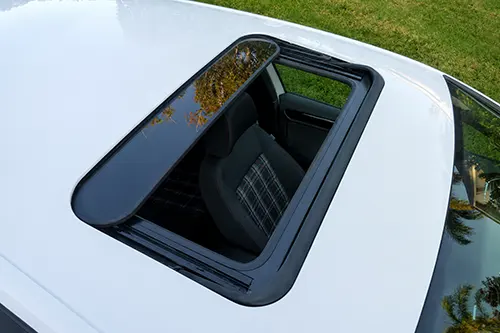
You checked the sunroof drains — they’re clear. You poured water down each corner, watched it stream out under the car, and probably felt a little relieved. Then the next rainstorm hits, the familiar musty smell comes back, and your passenger-side carpet is soaked all over again.
Frustrating, right? You’re not alone. Thousands of car owners run into this exact mystery: sunroof drains are clear, but the carpet is still wet. The truth is simpler, and more annoying, than most people expect: a clear drain does not guarantee a dry interior. Water is getting in some other way — through a failing cassette seal, a compromised door membrane, or an overflow path that’s easy to miss.
In this deep-dive guide, we’ll go through the three most common hidden leak sources after clogged drains have been ruled out. Whether you drive a Volkswagen, Audi, BMW, Ford, or Toyota, the underlying principles are universal. By the end, you’ll have a systematic diagnostic plan to finally get rid of that soggy carpet for good.
1. The Sunroof Cassette Seal: The Overlooked Failure Point
Most drivers assume the sunroof’s rubber seal — the one you see when the glass is closed — is the main defense against rain. In reality, that outer seal is designed to be weepy. It keeps out most of the water, yes, but it still allows some moisture to pass. The real waterproofing happens inside the sunroof frame, or “cassette.”
The cassette contains a plastic or metal tray with integrated gutters and four drain tubes. The seal between the glass panel and the cassette matters. What is important, though, is the cassette-to-roof seal — the foam or rubber gasket sitting between the entire sunroof assembly and the vehicle’s roof opening.
Signs of a Failing Cassette Seal:
- Water dripping from the overhead console or map light area – This indicates water is bypassing the cassette’s drain channels.
- Wet headliner near the sunroof opening – Especially at the corners, even when drains flow freely.
- Recurring dampness directly under the sunroof on the carpet – Not just near doors or kick panels.
How Water Sneaks Past the Cassette:
Over time, the cassette’s plastic can warp, the internal sealing foam can compress, or the bonding adhesive can fail. When that happens, water slipping past the outer weatherstrip no longer lands in the internal gutter. Instead, it drips straight onto the headliner, runs down the A-pillar or B-pillar trim, and eventually pools on the floor. The drains may be perfectly clear. They just never receive the water, because the cassette itself is compromised.
Diagnostic Steps:
- Remove the headliner partially – You don’t need full removal. Just lower the rear edge enough to see the top of the cassette.
- Perform a directed water test – With the sunroof closed, use a watering can to gently pour water over the glass edges. Have an assistant inside with a flashlight and watch for trickles coming from the cassette’s upper corners.
- Check for cracks – Inspect the plastic cassette tray for hairline cracks, especially around the drain nipple attachments.
Solution: Minor cracks can be sealed with a flexible urethane sealant (e.g., Sikaflex or butyl tape). If the cassette is warped or badly cracked, replacement is the only permanent fix — and yes, it’s labor-intensive. Expect a job often costing $800-1500, particularly on many European models (VW Passat, Audi A4, BMW E46/E90) known for cassette failures.
2. Door Membrane (Vapor Barrier): The Silent Killer of Carpets
If your sunroof drains are clear and the headliner stays dry, but the carpet is wet — especially behind the front seats or along the door sills — the problem is likely the door vapor barrier. This is a plastic sheet or foam panel glued to the inside of each door, behind the interior door panel. Its job is straightforward: stop water that enters the door through the window slot from draining into the cabin. Instead, it channels that water to the drain holes at the bottom of the door.
Over years of heat cycles and moisture, the adhesive holding the vapor barrier in place starts to fail. The plastic shrinks. Corners lift. Water then runs down the inside of the door, gets past the barrier, and seeps through speaker openings or trim clip holes — directly onto the carpet. It is worth noting that this is epidemic on many vehicles, including Audi A4/S4 (B5, B6, B7), BMW 3-series (E46, E90), Ford Focus, and Volkswagen Golf/Jetta.
How to Diagnose a Leaking Vapor Barrier:
- Wet carpet only after heavy rain or car wash – Not overnight dew.
- Carpet is wet along the door sill or near the seat base – Often the rear footwell on the side of the leak.
- Visible water trails – Remove the interior door panel (usually a few screws and clips). Look for brown or rusty water stains running down from the barrier’s peeled edges.
- Water test – With the door panel off, close the door and pour water over the outside window glass. Watch where water drips. If it runs past the barrier and out of the door’s inner sheet metal, you’ve found the culprit.
Proper Repair Steps:
- Remove the old barrier – Carefully peel away the plastic or foam. Discard the old, dried butyl tape.
- Clean both surfaces – Use isopropyl alcohol or wax remover on the door metal and the barrier itself.
- Apply new butyl rope sealant – Not silicone! Butyl remains flexible and seals permanently. Roll it into a thin strand and press it onto the door’s perimeter.
- Reattach the barrier – Press firmly. Some enthusiasts add a second layer of plastic sheeting for extra insurance.
- Test again – Pour water before reinstalling the door panel.
Warning: Avoid using foam tape or weatherstripping — they fail quickly. Use genuine butyl rope (available at auto body supply stores or online).
| Vehicle Model | Known Vapor Barrier Issue | Common Symptom |
|---|---|---|
| Audi A4 (B6/B7) 2002-2008 | Front door barrier adhesive fails | Wet driver/passenger front floor |
| BMW E46 3-series | Rear door barrier shrinks | Wet rear footwells |
| VW Golf/Jetta (Mk5/Mk6) | All four doors prone to leakage | Random wet carpets, musty smell |
| Ford Focus (2000-2011) | Foam barrier deteriorates | Wet behind front seats |
3. Hidden Overflow Paths: Where Else Can Water Enter?
If your cassette seal is intact and all four door membranes are dry, but the carpet remains wet, it’s time to think like a water droplet. Water follows gravity and the path of least resistance. At first glance, the leak may still seem sunroof-related. In reality, several less obvious entry points can mimic a sunroof leak almost perfectly.
3.1. Clogged or Broken Drain Tube Connections
Even when the drain tubes themselves are clear, the connection points at the cassette or the exit grommets often fail. On many SUVs (Ford Explorer, Jeep Grand Cherokee) and sedans (Honda Accord), the plastic drain nipple on the cassette cracks, or the rubber tube detaches from the grommet behind the wheel arch liner. Water then spills into the headliner or behind the dashboard instead of exiting outside.
Diagnosis: Remove the A-pillar trim and pull back the headliner corner. Have a helper pour water into the sunroof drain channel. Look for leaks at the attachment point before the water even reaches the tube.
3.2. Cowl/Air Intake Leaks
The cowl panel — the plastic grille at the base of the windshield — gets overlooked all the time. It houses the cabin air intake and HVAC system. If the cowl seal against the windshield fails, or if the drain holes in the cowl are blocked, water can pour directly into the HVAC blower motor, then run down the firewall insulation and onto the passenger-side carpet. This is a classic “clear sunroof drain but wet passenger floor” scenario, especially on Ford F-150, Chevrolet Silverado, and many Japanese cars.
Quick test: With the HVAC fan on high, pour water over the cowl. If water spits from the vents or you hear a gurgling sound, the cowl is flooding into the cabin.
3.3. Heater Core or Air Conditioning Condensate
Not every wet carpet comes from rain. A leaking heater core (coolant — sweet smell) or a blocked A/C drain tube (clear water, no odor) can soak the floor. The A/C drain tube is a short rubber hose exiting the firewall or tunnel. When it clogs with debris, condensation backs up and spills into the passenger footwell. Feels exactly like a rainwater leak, doesn’t it? But it can happen even on dry days.
Solution: Locate the A/C drain tube under the car (near the passenger side firewall). Use compressed air or a stiff wire to clear it. For heater core leaks, seek professional repair.
3.4. Roof Rail or Antenna Mounts
Factory roof racks, satellite radio antennas, or GPS shark-fin housings are sealed to the roof with foam or rubber gaskets. After years of UV exposure, those seals crack. Water then travels under the headliner, down the D-pillar (in wagons or SUVs) or C-pillar, and into the cargo area or back seat footwells. Because the water shows up far from the antenna location, this often gets mistaken for a sunroof leak.
Test: Remove the interior trim near the suspect mount and perform a water test with a garden hose (without spraying the sunroof).
Systematic Diagnostic Plan for Persistent Wet Carpets
Instead of guessing, follow this checklist in order. Start with the easiest checks first. It sounds basic, maybe even too basic, but this is what saves time.
- Confirm drain clarity – Use a long, soft brush or weed-whacker line to clean each corner. Pour water and verify flow at both front and rear exits.
- Dry the interior completely – Use a wet-dry vacuum and dehumidifier. Sprinkle baby powder or cornstarch on the carpet. This will reveal water tracks after the next leak.
- Door membrane inspection – Remove door panels on the side where carpets are wet. Look for peeled vapor barriers. Repair with butyl tape.
- Headliner drop corner – Lower the headliner just enough to see the sunroof cassette’s front and rear corners. Look for moisture or rust stains.
- Cowl and HVAC test – Remove the cowl cover. Clear debris. Pour water while observing the cabin air filter area.
- Antenna and roof mount check – Remove interior trim around the mounts. Look for water trails.
Why Some Mechanics Misdiagnose This Problem
Many shops do a quick drain flow test, see water exiting under the car, and declare the sunroof “fine.” Then they recommend expensive carpet replacement without fixing the real cause. That happens because they miss a key point: a clear drain does not guarantee a dry cassette. Water may be bypassing the drain channels entirely.
Door membranes also get ignored more often than you’d think, partly because many mechanics don’t want to remove door panels. Broken clips, new rattles — nobody likes that comeback job. As an informed enthusiast, you can push for proper testing or tackle it yourself.
Long-Term Prevention Tips
- Clean sunroof drains annually – Even if they’re clear now, debris builds up. Use compressed air gently (too much pressure can disconnect hoses).
- Inspect vapor barrier adhesive every 5-7 years – Especially if you live in a hot climate. Reapply butyl as a preventative measure.
- Apply silicone lubricant to sunroof weatherstrips – This keeps them supple and reduces water seepage past the glass.
- Check door drain holes – At the bottom edge of each door, ensure small drain slots are unclogged. Use a toothpick to clear them.
- Keep cowl drains free – Remove leaves and pine needles monthly, especially in autumn.
Conclusion: Stop Guessing, Start Testing
A wet car carpet with clear sunroof drains is one of the most frustrating automotive mysteries. Once you understand the three major hidden pathways — failed cassette seal, compromised door membrane, and non-obvious overflow routes — the problem becomes much easier to attack methodically. Start with the most common culprit for your vehicle’s make and model. For European cars, door membranes and cassette cracks are prime suspects. For Asian and domestic trucks, cowl leaks and A/C drains usually top the list.
Equip yourself with a watering can, a set of trim tools, and some patience. A dry, mold-free carpet really is within reach.
Final tip: If you do find a specific leak source, document it with photos and share it on model-specific forums. Your experience will help countless others dealing with the same soggy nightmare. Now go dry out that car.