

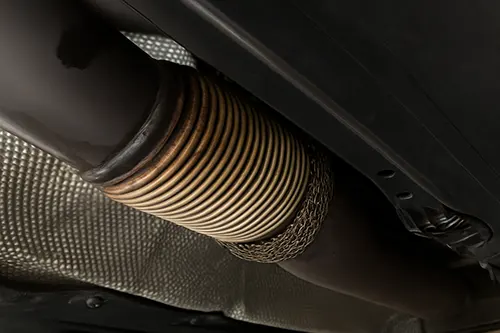
Few things ruin the morning ritual of firing up your engine like a metallic, tin‑can rattle that seems to come from somewhere underneath the car – and then disappears once the engine warms up. You’re not alone. Exhaust rattles on cold start are among the most common (and frustrating) complaints from car owners. The noise can range from a light buzzing to a violent shaking sound, often mistaken for a loose engine mount or a failing transmission. But in most cases, the culprit is hiding right in the exhaust system.
As an automotive enthusiast who has crawled under hundreds of cars, I can tell you that the cold‑start rattle almost always boils down to three usual suspects: loose heat shields, worn or broken rubber hangers, or internal baffles that have come loose inside the muffler or resonator. Each has a distinct signature, and with a little detective work – and a rubber mallet – you can pinpoint the exact source before spending a dime on parts. This guide walks you through the anatomy of exhaust rattles, step‑by‑step diagnostic techniques, and smart repair strategies.
Why Does It Happen Only on Cold Start?
Understanding the “why” helps you narrow down the problem. When your engine is cold, the idle speed is typically higher (fast idle) – often 1,200–1,800 rpm – to quickly warm up the catalytic converter and engine oil. That higher rpm creates more exhaust flow and stronger vibrations. At the same time, metal components are cold and have slightly tighter clearances or different resonant frequencies. As the exhaust system heats up, metals expand, clearances change, and the idle drops – the rattle magically disappears. This thermal behavior is a huge clue: it tells you the rattle is mechanical and clearance‑related, not an electronic or engine‑internal problem.
Suspect #1: Loose Heat Shields (The Most Common Culprit)
Heat shields are thin metal sheets spot‑welded or bolted to the exhaust pipes, catalytic converter, and floor pan. Their job is to protect the chassis and surrounding components from radiant heat. Over time, the spot welds crack from thermal cycling and corrosion. The shield then vibrates against the pipe or underbody, creating a high‑pitched metallic buzz or rattle.
How to Diagnose a Heat Shield Rattle:
- Sound signature: Thin, tinny, high‑frequency buzz that often changes pitch with engine speed. It may sound like a loose license plate frame but deeper.
- Cold‑start only? Yes – because the metal hasn’t expanded enough to create tension, but sometimes it can also rattle at certain rpm when warm.
- Quick test (safely): With the engine cold and parked, reach under the car (watch for hot parts later!) and tap the exhaust pipes and catalytic converter heat shields with a rubber mallet or the handle of a screwdriver. If you hear the same rattle, you’ve found it.
- Visual check: Look for rusted, cracked spot welds or a shield that feels loose by hand.
Fix Options:
- Temporary: Use large stainless steel hose clamps (worm‑gear clamps) around the pipe and shield to cinch it tight.
- Permanent: Re‑weld the broken spot welds (if you have a welder) or drill small holes and secure with self‑tapping screws and fender washers.
- Last resort: Remove the shield entirely – but only if it’s not near fuel lines or brake lines. Most cars can live without a small shield, but it’s better to reattach.
Suspect #2: Worn or Broken Exhaust Hangers (Rubber Isolators)
Your exhaust system is suspended from the underbody by rubber hangers (isolators). They allow movement while damping vibration. Over years of heat, ozone, and oil contamination, rubber dries out, cracks, or even separates. A failed hanger lets the exhaust pipe sag or bang against the subframe, sway bar, or heat shields – especially at higher cold‑start idle.
How to Diagnose a Hanger Rattle:
- Sound signature: A deeper, heavier “thunk” or “clunk” that can also occur when you go over bumps. It may be accompanied by a visual sag in the tailpipe.
- Test: With the engine off, grab the tailpipe and shake it vigorously up and down and side to side. If you hear metal‑on‑metal contact or see excessive movement (more than 1 inch), inspect each rubber hanger.
- Visual inspection: Look for dry rot, cracks, or a completely torn isolator. Also check the metal hooks on the chassis and exhaust side – they can rust thin.
Fix Options:
- Replace the rubber isolator: Universal hangers are cheap (often $5–15). Use soapy water to slide them onto the metal hooks. A hanger removal tool (or long pry bar) makes the job easier.
- Emergency fix: Use stainless steel zip ties or mechanic’s wire to secure the metal hook to the chassis – but replace with a proper rubber hanger soon.
Suspect #3: Internal Baffles – The Muffler or Resonator Failure
Inside your muffler and resonator are internal chambers and baffles designed to cancel sound waves. Over time, corrosion or fatigue can break a weld, causing a piece of metal to rattle inside. This is the most annoying rattle because you can’t see it – and it often requires replacing the whole muffler.
How to Diagnose an Internal Baffle Rattle:
- Sound signature: A “marbles in a can” rattle, sometimes with a buzzing that changes frequency. It may also produce a rattling sound when you rev the engine or when the car decelerates.
- The definitive test: With the engine cold (or fully cool), take a rubber mallet and firmly strike the muffler canister and resonator while listening. If you hear loose debris rattling inside – that’s your baffle.
- Alternative test: Sometimes you can duplicate the rattle by revving the engine in Park and then letting off – the internal piece will vibrate as exhaust flow changes.
Fix Options:
- No reliable permanent fix: You can’t weld inside a sealed muffler. Replacement is the only permanent solution.
- Temp band‑aid (not recommended): Some people drill a small hole, fish out the loose piece with a magnet or wire, then weld the hole shut – but it’s rarely worth the effort.
- Upgrade opportunity: Replace with a quality aftermarket muffler (stainless steel recommended) or a performance cat‑back system for better sound and durability.
Quick Reference Table: Rattle Source at a Glance
| Symptom / Test | Heat Shield | Hanger | Internal Baffle |
|---|---|---|---|
| Sound type | Thin, tinny buzz | Deep clunk / thunk | Marbles in a can |
| Occurs on bumps? | Sometimes | Yes, often | No – only with engine running |
| Rubber mallet test | Rattle when tapping pipe/shield | Excessive movement when shaking tailpipe | Rattle inside muffler/resonator when tapped |
| Visual clue | Rusty spot welds, loose metal sheet | Cracked or torn rubber | None – internal |
| Typical fix cost (DIY) | $5–20 (clamps/screws) | $10–30 (new hangers) | $80–300+ (new muffler) |
Step‑by‑Step Diagnostic Workflow (No Lift Required)
Follow this systematic approach to avoid replacing parts unnecessarily:
- Prepare safely: Park on level ground, set parking brake, and let the engine cool completely (at least 2–3 hours after driving). Use jack stands if you need to go under the car – never rely on a floor jack alone.
- First – the shake test: Grab the tailpipe and shake it aggressively. Listen for clunks. Check each rubber hanger visually. If you see a broken hanger, you’ve found the problem.
- Second – the mallet tap test: Using a rubber mallet or a piece of wood, start tapping along the exhaust from the catalytic converter back to the muffler. Tap heat shields, the pipes, and the muffler body. Recreate the rattle.
- Third – pinpoint with a stethoscope or long screwdriver: Place a mechanic’s stethoscope or a long screwdriver (handle to ear) on different exhaust components while an assistant starts the cold engine. The loudest point reveals the source.
- Fourth – inspect the heat shields: Even if they don’t rattle when tapped cold, look for broken welds. Use a pry bar to gently move each shield – any movement means it will rattle when hot.
Bonus: Other Exhaust Rattles You Shouldn’t Ignore
Sometimes the rattle isn’t the exhaust itself but something nearby:
- Catalytic converter internal failure: If the ceramic monolith breaks apart, it can rattle inside the converter. Tap the converter – if you hear a heavy rattle, replacement is required. A failing cat may also trigger a check engine light (P0420).
- Loose exhaust manifold heat shield: Many cars have a shield over the manifold. It can rattle at cold start. Access is harder, but the diagnosis is the same.
- Brake or fuel line clips: Plastic clips holding lines to the underbody break, allowing lines to vibrate against the exhaust. Look for contact marks.
Prevention: Make Your Exhaust System Last
Once you fix the rattle, keep it quiet with these habits:
- Annual underbody inspection: When you change oil, glance at the exhaust hangers and heat shields. A $10 hanger now saves a tow later.
- Anti‑seize on hardware: If you remove exhaust clamps or bolts, apply anti‑seize compound to prevent rust welding.
- Replace rubber hangers preventively: Every 80,000–100,000 miles, swap out all hangers. They’re cheap insurance.
- Use stainless steel aftermarket parts: When replacing a muffler or resonator, choose stainless steel (409 or 304 grade) – it resists corrosion far better than mild steel.
When to Call a Professional
Most exhaust rattles are DIY‑friendly, but a few situations warrant a shop:
- Rusted exhaust bolts that snap off (extracting them requires a torch or special tools).
- Cracked exhaust manifold or flex pipe – welding or replacement is needed.
- Internal catalytic converter failure – a shop can confirm with a backpressure test or emissions diagnosis.
- If you lack jack stands or safe working area – never crawl under a car supported only by a jack.
Final Thoughts: Stop Guessing, Start Listening
The cold‑start exhaust rattle is a puzzle that yields to simple physics and a methodical approach. Heat shields, rubber hangers, and internal baffles each sing a different song. A rubber mallet, a flashlight, and 20 minutes of your time can save a costly misdiagnosis. Next time your car sounds like a can of nails at startup, resist the urge to turn up the radio. Instead, slide underneath (safely) and become the detective your exhaust system deserves. Fixing the rattle not only restores peace and quiet but also prevents further damage – a loose heat shield can wear a hole in your exhaust pipe, and a broken hanger can crack a weld on the catalytic converter.
Remember: most rattles are harmless annoyances, but if you ever hear a sudden, loud metallic bang accompanied by a change in exhaust note, shut off the engine – a broken internal baffle could be blocking the exhaust flow. But for 99% of cold‑start rattles, the fix is cheap and satisfying. Now go chase that rattle and enjoy a quiet, smooth idle again.