

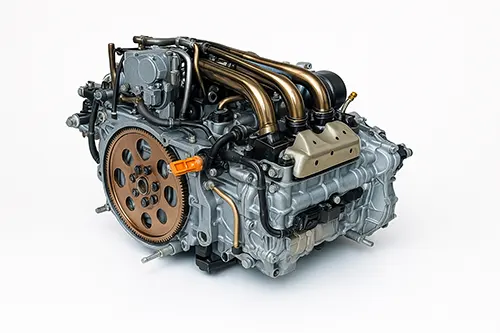
Understanding the Subaru Forester Firing Order
The firing order of an engine dictates the sequence in which each cylinder's spark plug ignites the air‑fuel mixture. For Subaru Forester models equipped with the signature boxer four‑cylinder engine (both naturally aspirated and turbocharged variants), the firing order is consistently 1‑3‑2‑4. This sequence is engineered to balance the horizontally opposed layout, reducing vibration and ensuring smooth power delivery across the RPM range. Understanding this firing order is essential for diagnosing misfires, performing ignition system maintenance, and correctly installing spark plug wires or coil packs.
Identifying Cylinder Locations and Firing Order
Before working on your Forester's ignition system, you must know which cylinder is which. Subaru numbers its cylinders as follows:
- Cylinder 1: Front left side of the engine (driver’s side in left‑hand‑drive vehicles)
- Cylinder 2: Front right side (passenger side)
- Cylinder 3: Rear left side
- Cylinder 4: Rear right side
The firing order 1‑3‑2‑4 means that after cylinder 1 fires, cylinder 3 ignites next, followed by cylinder 2, and finally cylinder 4. This alternating left‑right‑left‑right pattern is a hallmark of the boxer design and contributes to its characteristic low center of gravity and smooth operation.
To visually confirm cylinder locations on your specific model year, refer to the emissions label under the hood or consult your owner’s manual. Most Subaru Foresters produced from the mid‑1990s to the present use this numbering scheme, though always verify with model‑specific documentation.
Common Ignition System Configurations
Subaru Foresters have used two main ignition setups over the years:
| System Type | Years (approx.) | Characteristics |
|---|---|---|
| Distributor‑based (older models) | 1998–2002 (some early SJ/SF) | Single ignition coil, spark plug wires, and a distributor cap. Firing order is physically determined by the distributor rotor and cap wiring. |
| Coil‑on‑plug (COP) / Coil‑near‑plug | 2003+ (most SG, SH, SJ models) | Individual ignition coils mounted directly over each spark plug. No spark plug wires; the engine control unit (ECU) triggers each coil in the 1‑3‑2‑4 order. |
Identifying which system your Forester has will guide your inspection and service procedures.
Checks: Verifying Firing Order and Ignition Health
Regular checks of the ignition system can prevent misfires, rough idling, and poor fuel economy. Here’s a systematic approach:
1. Visual Inspection of Components
- Spark plug wires (if equipped): Look for cracks, burns, or corrosion at the terminals. Ensure they are routed correctly and not touching hot exhaust components.
- Ignition coils: Check for physical damage, rust, or signs of arcing (carbon tracks) on the coil body or around the spark plug well.
- Spark plugs: Remove and inspect each plug. Electrode wear, fouling, or excessive carbon deposits can indicate firing order problems or incorrect heat range.
2. Confirming Firing Order with a Multimeter (Wired Systems)
For distributor‑type systems, you can verify the firing order by tracing the spark plug wires from the distributor cap to each cylinder. The cap terminals are usually marked with cylinder numbers. Use a multimeter to check the resistance of each wire – high resistance or an open circuit indicates a faulty wire that could cause a misfire.
3. Using an OBD2 Scanner
Modern Foresters (1996+) are OBD2 compliant. A scan tool can read misfire codes (P0301, P0302, P0303, P0304) that pinpoint which cylinder is misfiring. If the scanner indicates a specific cylinder, you can focus your diagnosis on that cylinder’s ignition components, while still considering that the firing order might be disrupted by a faulty ECU signal or wiring issue.
4. Ignition Timing Verification
While the firing order is fixed, ignition timing can sometimes be adjusted on older models. Using a timing light, check that the timing marks align with manufacturer specifications. Incorrect timing can mimic a firing order problem and cause poor performance.
Safe Service Steps for Working on the Firing Order System
Servicing the ignition system involves high‑voltage components and fuel vapors. Always follow these safety guidelines:
Preparation
- Park the vehicle on a level surface, engage the parking brake, and allow the engine to cool completely.
- Disconnect the negative battery terminal to prevent accidental starting or electrical shorts.
- Work in a well‑ventilated area, away from open flames or sparks.
Replacing Spark Plug Wires (if applicable)
- Remove one wire at a time to avoid mixing up the order. Label each wire with its cylinder number.
- Inspect the wire boots and terminals. Use dielectric grease inside the boots to ease future removal and prevent moisture ingress.
- Route new wires exactly as the originals, keeping them away from hot surfaces and sharp edges. Ensure they click securely onto the spark plug and distributor/coil terminals.
- Double‑check that each wire connects to the correct cylinder according to the firing order 1‑3‑2‑4 and the distributor cap layout.
Replacing Ignition Coils (COP systems)
- Remove the electrical connector and mounting bolt for the coil on the misfiring cylinder.
- Pull the coil straight out of the spark plug well. If resistance is met, twist gently to break any corrosion.
- Before installing the new coil, apply a small amount of dielectric grease to the inside of the boot and to the coil‑to‑plug connection.
- Torque the mounting bolt to manufacturer specifications (typically 7–10 ft‑lb). Over‑tightening can crack the coil or cylinder head.
Replacing Spark Plugs
- Use only the spark plug type and gap specified for your Forester. Iridium or platinum plugs are common and last longer.
- Remove debris around the spark plug well before extraction to prevent dirt from entering the cylinder.
- Hand‑start the new plug to avoid cross‑threading, then torque to specification (usually 15–20 ft‑lb for aluminum heads).
- Reconnect the ignition wire or coil immediately after plug installation.
Final Checks
- Reconnect the battery and start the engine. Listen for smooth idle and check for warning lights.
- If a misfire persists, re‑verify that all connections are secure and that the firing order is correct.
- Clear any OBD2 trouble codes and take the vehicle for a test drive to confirm the repair.
Special Considerations for Different Forester Generations
While the 1‑3‑2‑4 firing order remains constant, service procedures vary slightly across generations:
- SF (1998–2002): Often equipped with a distributor. Mark the rotor position before removal to maintain base timing.
- SG (2003–2008): Transition to coil‑on‑plug; no distributor adjustments needed.
- SH (2009–2013) and SJ (2014–2018): COP systems with more sophisticated ECU controls. Always use OEM‑quality coils to avoid compatibility issues.
- SK (2019+): Latest generation with direct injection and advanced ignition management. Consult the service manual for any unique steps.
Conclusion: Mastering Your Forester’s Ignition
Understanding the Subaru Forester firing order is a fundamental skill for any DIY enthusiast or professional mechanic. By correctly identifying cylinder locations, performing regular ignition system checks, and adhering to safe service practices, you can keep your Forester running smoothly, efficiently, and reliably for hundreds of thousands of miles. Always consult your vehicle’s service manual for torque values and specific procedures, and when in doubt, seek advice from experienced Subaru communities or certified technicians.
Remember: Safety comes first. High‑voltage ignition systems can deliver a dangerous shock, even with the battery disconnected, due to residual capacitance in the coils. Allow the system to sit for at least 10 minutes after shutting off the engine before handling components, and always wear insulated gloves when working near spark plugs and coils.