

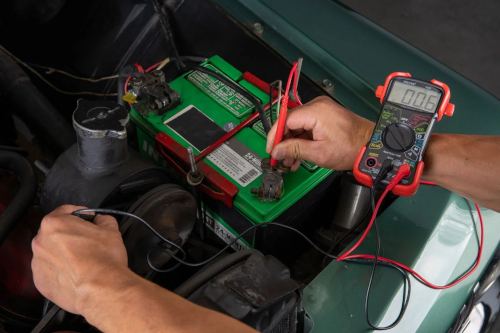
A dead battery by morning is frustrating. Instead of guessing, confirm parasitic draw the right way—from quick to precise: clamp meter, multimeter in series, and a fuse‑pull isolation method.
Specs and prep
- Typical sleep current: 20–50 mA (some platforms up to ~80 mA).
- Let modules go to sleep: 10–30 min after ignition off.
- Simulate closed doors/hood with latches so networks don’t wake up.
Measurement workflow
- Clamp meter: measure sleep current on the negative cable without breaking the circuit. If above spec, continue.
- Multimeter in series: place in series on the negative terminal, 10 A fused range; wait for a stable reading.
- Fuse‑by‑fuse isolation: pull fuses one by one and watch current drop; the circuit that changes points to the culprit.
Typical culprits
- Poor‑quality accessories on the power socket/OBD; dash cams without auto‑sleep.
- Stuck relays; faulty comfort/lighting modules.
- Networks that never sleep due to bus errors or outdated software.
After you isolate the circuit
- Check grounds/connectors and measure draw with the suspect module removed.
- Update module software if a bulletin exists.
- Replace the accessory/module and confirm current returns to spec.
Takeaway
The “clamp → multimeter → fuses” sequence quickly reveals the source. Let networks sleep and log every change—you’ll solve it faster and with confidence.