

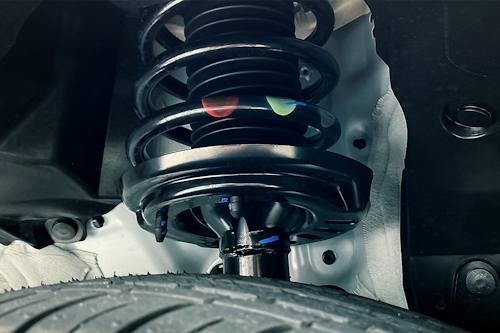
Ride floaty, nose dives, or the steering wheel chatters over small bumps? Suspension refresh decisions get easier when you separate struts from shocks, understand alignment effects, and time the work around tires and bushings.
Strut vs shock—what changes
- Strut: structural—sets camber/caster on many cars; bearing plate affects steering feel.
- Shock: damping only—bolt‑on with coils or leafs; alignment impact is minimal.
Replace when symptoms say so
- Porpoising after speed bumps; pogo on highway joints
- Uneven tire scalloping despite balance and proper pressure
- Greasy strut/shock bodies—seal leakage
Do it in the right order
- Inspect control arm and sway bar bushings first—worn rubber ruins new dampers.
- Replace struts/shocks in axle pairs; reuse springs only if free length/condition passes.
- Finish with a four‑wheel alignment—camber/caster may shift on strut cars.
Choices: comfort vs control
- OE‑equivalent twin‑tube for comfort and quiet
- Monotube for better heat control and crisp response
- Touring kits (spring + matched damper) if ride height or balance needs a reset
Case study
Compact SUV with “new tires, still noisy”. Rear shocks were weak; inner‑edge cupping kept returning. New shocks + rear toe correction cured the hum and extended tire life.
Checklist
- Bushings OK? yes/no
- Leak traces? axle ___
- Alignment booked? date ___
Result: refresh done in the right order delivers stable ride, quieter cabin, and tires that finally wear evenly.
Pro tips & FAQs
- Baseline first: document symptoms and measurements before parts. It saves money and proves the fix.
- Spec over brand: match OEM specs for fluids/seals; quality matters more than labels.
- Torque & sequence: follow VIN/platform service info—overtorque ruins aluminum and plastics.
- After the job: road‑test, recheck levels/fasteners, and log a quick post‑repair data snapshot.
Pro tips & FAQs - details
- Baseline first: document symptoms and measurements before parts. It saves money and proves the fix.
- Spec over brand: match OEM specs for fluids/seals; quality matters more than labels.
- Torque & sequence: follow VIN/platform service info—overtorque ruins aluminum and plastics.
- After the job: road‑test, recheck levels/fasteners, and log a quick post‑repair data snapshot.
Pro tips & FAQs - practical notes
- Baseline first: document symptoms and measurements before parts. It saves money and proves the fix.
- Spec over brand: match OEM specs for fluids/seals; quality matters more than labels.
- Torque & sequence: follow VIN/platform service info—overtorque ruins aluminum and plastics.
- After the job: road‑test, recheck levels/fasteners, and log a quick post‑repair data snapshot.
Pro tips & FAQs - verification
- Baseline first: document symptoms and measurements before parts. It saves money and proves the fix.
- Spec over brand: match OEM specs for fluids/seals; quality matters more than labels.
- Torque & sequence: follow VIN/platform service info—overtorque ruins aluminum and plastics.
- After the job: road‑test, recheck levels/fasteners, and log a quick post‑repair data snapshot.